An off-the-cuff video Blog for electronics engineers, enthusiasts, hackers and Makers
RSS icon Email icon Home icon
  • EEVblog #50 – Solid State LED Lighting, and How Thermal Design Sucks

    Posted on December 19th, 2009 EEVblog 22 comments

    Dave lights up his new backyard deck with Cree XPG LEDs, and then winds up measuring the wind from a storm instead. And who can spell efficacy?

    LINKS:
    Cree XPG LED Datasheet
    Arctic Silver Thermal Adhesive
    Luminous Efficacy Graph
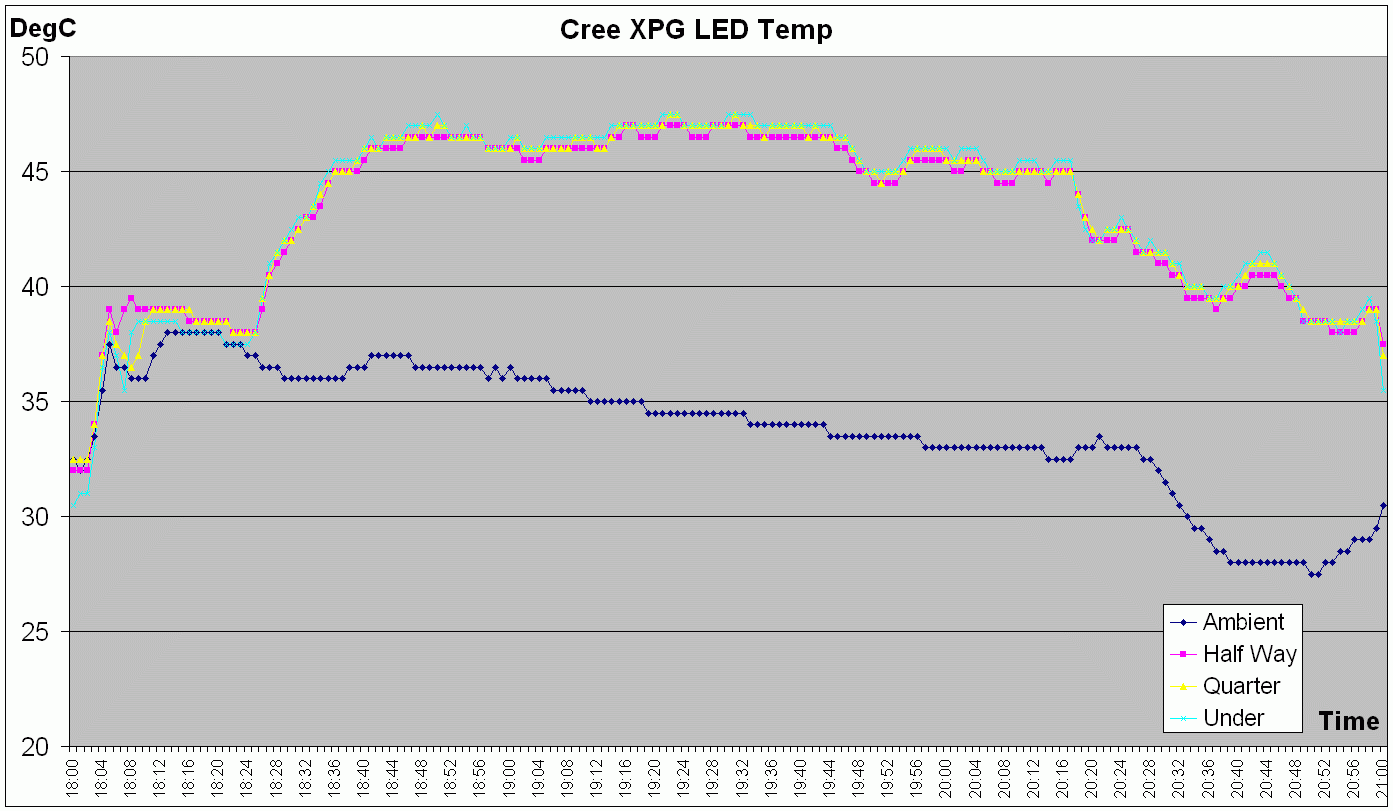
    Graph #1
    Graph #2
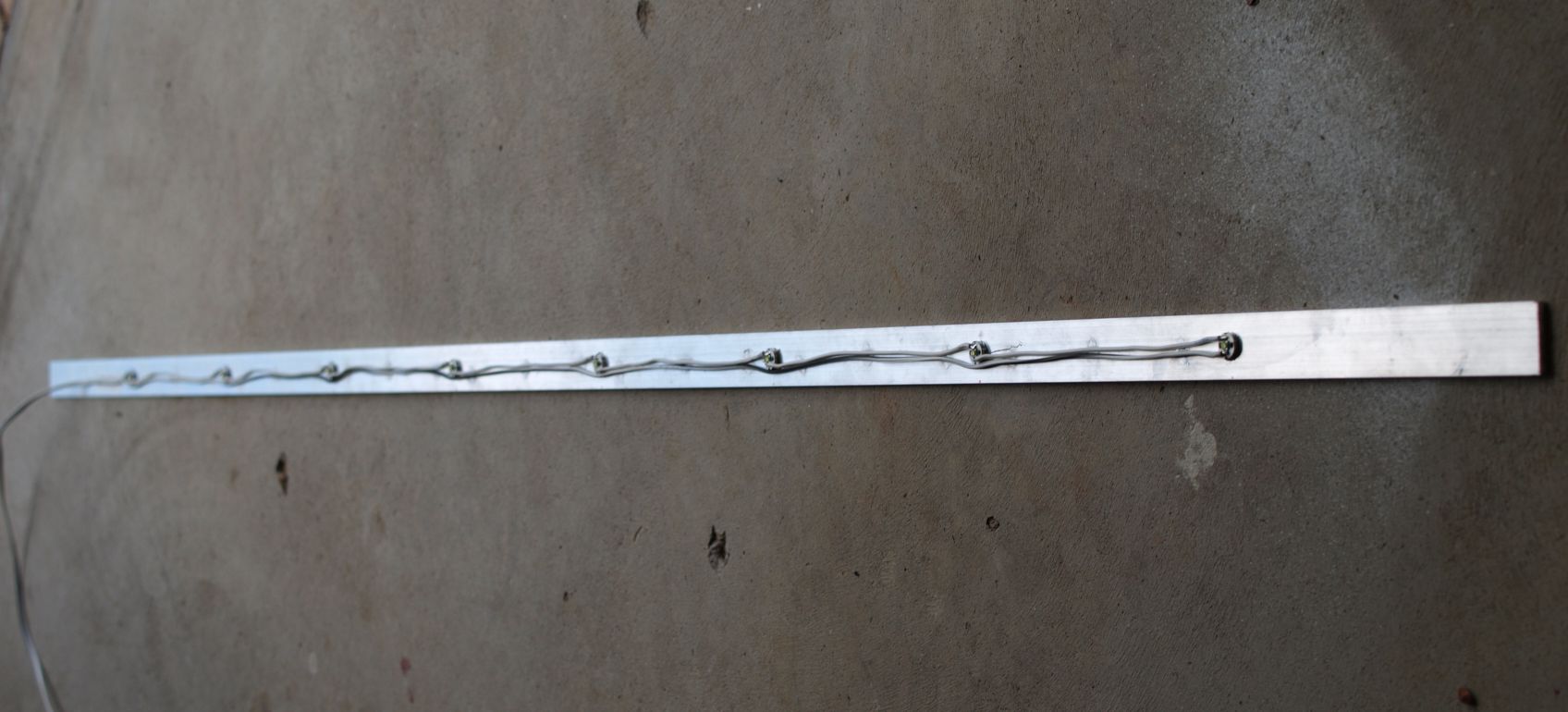
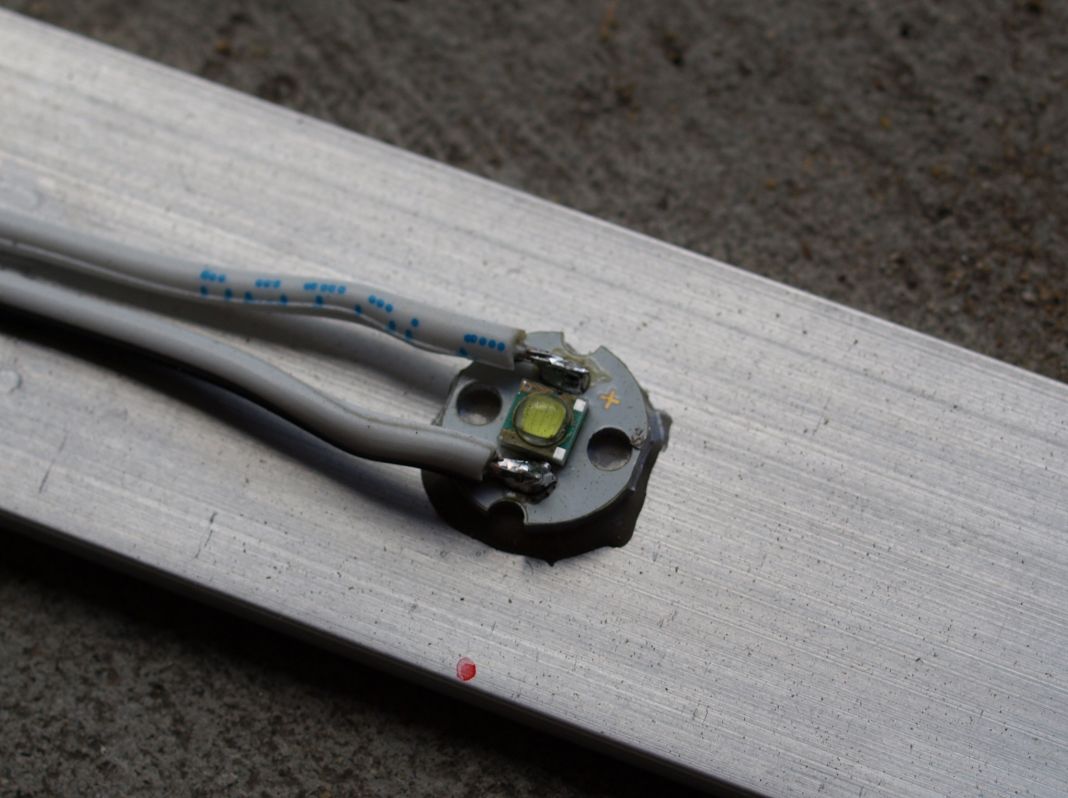
    LED Strip, Mounted LED
    700mA 35W Mains LED driver

    • Stumbleupon
    icon for podpress  EEVblog #50 - Solid State LED Lighting, and How Thermal Design Sucks: Download (192)
     

    22 responses to “EEVblog #50 – Solid State LED Lighting, and How Thermal Design Sucks” RSS icon

    • Hi Dave, Love the Blog :)

      I have never tried to work out thermal designs in engineering, I like you look at the datasheet that usually says you need a heatsink of X/W, and then just use a heatsink slightly better ;) or if I have the ability I use the case (assuming it is metal)

      Although I believe there is a thermal cad package out there, which can take into account all the various points of say a PCB with a multi layer stackup and then work out say a Dpak package which is dumping X watts into a PCB….. I personally just prefer to “Build it” and then measure heat, if the magic smoke comes out it needs more heatsinking, if it is not too hot to touch then it has enough ;)

      Regards,

      Kat.

    • BTW I love LED lights, but people resist them as they are too “White” ie they have a high blue content, people prefer a warmer or redder light.

      Me personally would prefer to pay the power supply company less money ;)

      Regards,

      Kat.

      • Actually, nowadays power LEDs are avilable in various white flavours, often called, cool white, warm white, and so on.

      • The latest offerings from one of the Phillips data sheets give you Kelvin ratings. Choosing LED’s will soon be like choosing T8 fluorescents. Even the CFL people are starting to wise up. Proper lighting color and rendition is rather important in work spaces and the technology is starting to catch up.

    • Fun idea for you. Microcontroller up the Cree’s individually. Dimmer? patterns? audio sensor? proximity sensor?

      I was under the impression the Phillips Luxeons were better then the CREEs on the market.

      I actually own two Luxeons but haven’t tried them out as ive been missing the thermal adhesive material.

      I have an idea for a smart flashlight thats pretty rediculous: Luxeons mounted on a heatsink with a fan and thermistor:

      http://www.danielbjohnson.net/digital-flashlight-800-lumens/

    • Oh dear I’m going to have to disagree.
      For 8 LEDs on a single heatsink the first 3 terms (LED,Base & Adhesive) should be represented by 8 parallel paths, only the heatsink is a single path. As your measurements show the heatsink temperature does not vary much with distance the approximation is valid.

      Secondly a cool heatsink does not always imply a safe design.
      Take the extreme case of a transistor with a 15W rating (at 25 C case) and a maximum junction temperature of 175 C mounted on a 0.5 C/W heat-sink.
      If the transistor now dissipates 15W, the heat-sink temperature will rise by only 7.5 C to 32.5 C but the junction temperature will be out of spec at 182.5 C.

      Jim

    • Hi Dave,
      good talk on LEDs.

      It would be nice to show how to perform easy datalogging and charting.

      What software can be used and a kind of demo would be really thankful.

    • …and a warning :

      avoid looking directly into the lightsource !
      i am fiddling around with a ostar led, running 24V at 750mA, producing massive heat and pumping out lumens !
      i blinded myself for several minutes when i was accidently switching it on when pointed at my face !

      …and dave you’re right: thermal design sucks and is often done wrong !
      the best thing: build the setup that fits into your desired space, measure the temperature under extreme conditions. getting hot ?! – add more heatsink area if possible or include a fan !
      measure again :)

      i’m an audio guy and thats how you do stuff in my business… listen and repeat :)

      keep up the good work !

      looking forward to have a beer with ya in the future :)

    • The real question is lifetime. If junction temperatures are not getting too hot, lifetimes should be high. But spending the extra money to replace all your ceiling flood lamps with something like fluorescents does not make as much sense when the fluorescents are burning out twice as fast. The lifetime for LEDs appears to be rated from 10khrs to 50khrs.

    • Hi Dave,

      Really enjoy the video blog, I am a novice but still enjoy it.

      I had a question about the chart you showed with the efficiencies of the different color type LEDs. I was under the impression that the white LEDs like your using are actually a UV LED with the semiconductor having a phosphorus coating, and the white light is a product of the phosphorus coating reacting to the UV. So wouldn’t it work to just look at the UV LEDs efficiency to figure out what your LEDs efficiency is?

      Me and my brother discuss electronics and he is my source on how this high wattage white LEDs work. I guess the way to Identify them is the yellow color of the emitters.

      But I am a novice like i said.

    • awesome…

    • Love these blogs – Dave.

      Now, please tell me how efficiency (or is it efficacy?) varies with input voltage, with regard to temperature as a function of ambient temperature and humidity (humidity has got to play a role in heat dissapation, no?!)

      Just kidding.

      Thanks, see you next week…

      ~E

      • There is no such thing as “input voltage” with LED’s, they are driven from a constant current. But yes, the voltage drop will vary slightly with temperature, around -2.1mV/degC which can be ignored in this application.

    • I don’t think the calculation is difficult. Just the basic heat equation with 5 heat sources (or whatever the number of LEDs) and a massive conducting heat sink.

    • Thermal calc’s = guesstimate, then suck it & see. ;^)

    • I have a question about the current used here: At full power, these LEDs use nearly twice the current of a 60 Watt bulb. Using 16 of them, even when they are only running on 700mA, adds up to 11.2Amps. That’s probably all the load you want to put on a 15Amp breaker. did you have to add a breaker line just for these lights?

      • Hi Adam,

        Not quite, the led’s run at say 700mA, this is with a forward voltage drop of 3.2V (this voltage was taken from the LED data sheet), at this point the led use (W=V*I) 2.24W.

        If you had 16 of these led’s, depending on your power source, you could put them all in serries, with a terminal voltage of at least 51.2V with internal current limit, or about 60V with an external resistor (12 ohms 10W)

      • That’s not how it works.
        The LED’s only take 2.2W each (remember, they only have a voltage drop of 3.2V), so that’s 35.2W total power for all 16 LEDs, or half of a single 60W incandescent bulb. Add in the efficiency loss in the controllers and it’s probably say 45W at most. At 240V that’s only around 190mA from the mains.
        So they are incredibly efficient, more than twice as good as CFL’s.

    • Hi Dave,
      Thanks for putting the spotlight on the amazing progress in LED lighting – I agree that they should get much more attention and use, in particular to reduce energy wasted while the longevity (especially under mechanical shock and vibration) is an added bonus.
      I am still wondering why you said that thermal modeling sucks, after you explained that you found data about the thermal behavior of an alu strip 3mm thick and 25mm wide saying it is about 3 deg C per Watt.
      If I plug in the waste heat of a single LED, assuming that the LEDs are far enough apart to not influence each others temp much, then I arrive at 4.2 deg temp delta. Taking the total power of all LEDs at 11.2W the temp rise would be 34 deg, so apparently the truth is in the middle – only the adjacent two LEDs influence the temp of each LED (total power 3x 1.4W = 4.2W) so total temp rise is about 12.6 deg C.
      By the way: in your model you included the Junction to Base thermal resistance in the total 13 deg difference you measured, but I doubt that you measured the junction temp. Most likely you measured the temp at the base of the LED. However, you can easily calculate the temp of the junction after measuring the temp of the base and the total power dissipated in the LED, knowing that the Junction to Base thermal resistance is 6 deg C per Watt and the heat dissipation is 1.4W it means that the Junction only runs 8.4 deg hotter than the Base.
      So, during your hot Sidney day with 37 deg C ambient the Base apparently runs about 50 deg C with the particular Alu strip you chose and the Junction will be well below 60 deg C. That means it is pretty cold and should last a very long time. Enjoy the lights and I look forward to more interesting Vlog posts. Cor.

    • I think this is brilliant. I just bought some of the 6500k pure white ones. After looking at it, I can’t wrap my head around how you can get these to be dimmable. A microprocessor can use pwm for a normal low watt led, but this high watt led would burn out a micro processor.

      • You can dim them either by PWM, or simply driving them from an adjustable current course.
        There are mains drivers available that have a dim-able output, like this:
        http://www.cutter.com.au/proddetail.php?prod=cut684

      • @spencer: The answer to that question is to interface the microcontroller to the LED’s via a transistor or mosfet. Of course, the amount of power being switched is going to have an impact on the design of the switching circuit, but I don’t otherwise see why it wouldn’t be possible. In fact, if it’s decently designed it would be much more efficient in terms of power regulation than any current limiting resistor could/would be.


    Leave a reply