-
The noise specs of the ADA4530-1 are not much better than for the AD549L. Both are 4 µV_pp for 0.1 Hz-10 Hz. And current noise is only 0.07 compared to 0.11 fA /sqrt(Hz). It is mainly the offset drift that is really much better. Also bias current at higher temperature and thus bias drift is much better.
The input capacitance is quite a lot larger - so if important, the AC performance can differ.
Before a modification, I would test the ADA4530-1 in a separate circuit. At that current level the board design and insulation is important, and the AD549L is likely not in a SOI8 case to allow direct replacement any adapter will add to leakage. -
The noise specs of the ADA4530-1 are not much better than for the AD549L. Both are 4 µV_pp for 0.1 Hz-10 Hz. And current noise is only 0.07 compared to 0.11 fA /sqrt(Hz). It is mainly the offset drift that is really much better. Also bias current at higher temperature and thus bias drift is much better.
The input capacitance is quite a lot larger - so if important, the AC performance can differ.
Before a modification, I would test the ADA4530-1 in a separate circuit. At that current level the board design and insulation is important, and the AD549L is likely not in a SOI8 case to allow direct replacement any adapter will add to leakage.
I suppose it is sufficient to say that I work with both AD549 and ADA4530-1 every day .
.
Cheers
Alex -
The noise specs of the ADA4530-1 are not much better than for the AD549L. Both are 4 µV_pp for 0.1 Hz-10 Hz. And current noise is only 0.07 compared to 0.11 fA /sqrt(Hz). It is mainly the offset drift that is really much better. Also bias current at higher temperature and thus bias drift is much better.
The input capacitance is quite a lot larger - so if important, the AC performance can differ.
Before a modification, I would test the ADA4530-1 in a separate circuit. At that current level the board design and insulation is important, and the AD549L is likely not in a SOI8 case to allow direct replacement any adapter will add to leakage.
Perhaps I should elaborate on the differences between the AD549 and the ADA4530-1. The main problem with the AD549 is the strong dependency of the input currents from temperature, for every 8 degrees the current doubles and in the K263 it means that the current offset can easily vary with changes in the ambient temperature. Early this morning I've noted that the offset current on my K263 is about 37fA at the room temperature about 20C. It was almost 100fA yesterday evening when the lab was at about 25C. Also the LF current noise is proportional to the bias current and would also increase with temperature. The ADA4530 has CMOS inputs and does not exhibit a measurable increase in the bias current up to about 60-70C, with the bias currents well below 1fA. On top of this, you get much better temperature stability of the voltage offset. So I expect a considerable improvement in performance for the K263. I would just hard-wire the ADA4530-1 chip in place of the AD549, using a thin copper wire, no adapters (though an adapter from Rogers RO4350B laminate would work just fine).
Another important difference is that the total supply voltage for the ADA4530-1 is only 16V and for the AD549 it is 36V, so a direct replacement is not always possible. Fortunately, in the K263 the supply voltage for the electrometer is only about 15V.
Cheers
Alex
P.S. - on the current noise density - 0.11 fA /sqrt(Hz) for the AD549L is specified at 1kHz, and 0.07 fA /sqrt(Hz) for the ADA4530-1 is specified at 0.1Hz. Which makes, actually, a lot of difference (the noise of the AD549 at 0.1Hz would be at least ten times higher, most likely much more than that, especially at a higher than 25C temperature). -
The AD549 and AD4530 are FET based. So there current noise should not be higher at low frequencies. It is more that beginning from a frequency in the kHz range it goes up.
Besides current noise from the chip itself there could be noise associated with leakage - this might show some 1/f part, but this could be comparable as it does not depend so much on the chip, more on the package / board or standoffs.
It might no be practical to operate the chips at 20 C - to get the humidity down one might want to have the chip more at 10 K above environment. Also for the AD4530 there should be the typical increase in bias with temperature, at least most CMOS chips show it. Only the level is lower so that one might not notice it so much. -
The AD549 and AD4530 are FET based. So there current noise should not be higher at low frequencies. It is more that beginning from a frequency in the kHz range it goes up.
Besides current noise from the chip itself there could be noise associated with leakage - this might show some 1/f part, but this could be comparable as it does not depend so much on the chip, more on the package / board or standoffs.
It might no be practical to operate the chips at 20 C - to get the humidity down one might want to have the chip more at 10 K above environment. Also for the AD4530 there should be the typical increase in bias with temperature, at least most CMOS chips show it. Only the level is lower so that one might not notice it so much.
The AD549 is JFET based, the ADA4530-1 is MOSFET based. The leakage current for the AD549 is the actual gate current of input JFETs, for the ADA4530-1 it is a leakage current of bootstrapped protection diodes. On average, at the same temperature, the bias current of the ADA4530-1 is over 1000 times lower than that of the AD549. Below are the bias current v temperature graphs from the datasheets of these two chips (note the scale difference).
Cheers
Alex
-
Early this morning I've noted that the offset current on my K263 is about 37fA at the room temperature about 20C. It was almost 100fA yesterday evening when the lab was at about 25C.
Are you sure it's just the temperature, not a humidity issue? Although I guess it's the same closed case as the 617 electrometer, so it shouldn't be a big issue.
Keeping the pcb as clean as possible helps a lot in offset & stability. I cleaned the 6517 verry thouroghly about six months ago, and I never get any offset above 0.2 pA. It seems less temperature dependant too. I have stored it in a dry enviroment wich helps a lot.
I have used quite some AD542, AD547 and AD549, and they are temperature sensitive indeed. Now I use mostly LMC662, but because of the much lower power supply voltage it's not a drop in replacement. But they are stable, verry cheap and available in SOIC8 and DIP8.
Are you still using the Belden 9222? I really disliked that cable. It seems to be more noisy than the Keithley triax, and it's way to thick and rigid. Triboelectric effect on this cable is terrible too. I only use use Keithley triax now. More expensive, but a treat to work with.
BTW, verry nice piece of gear. A small current source has been on my wanted list for quite some time.
-
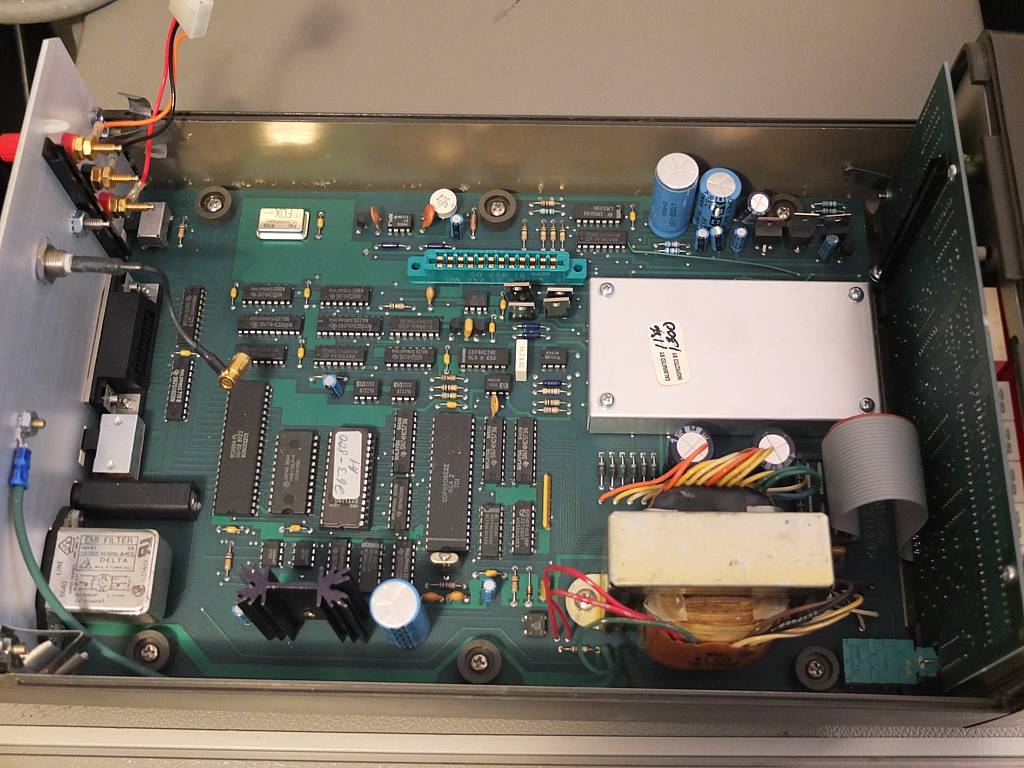
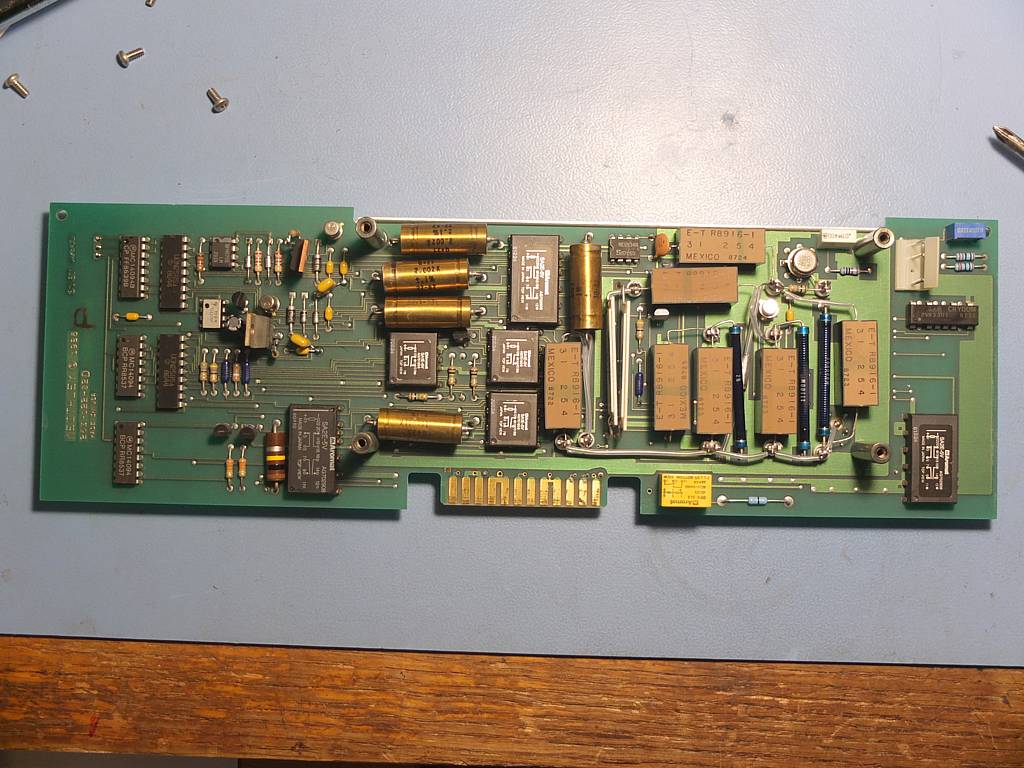
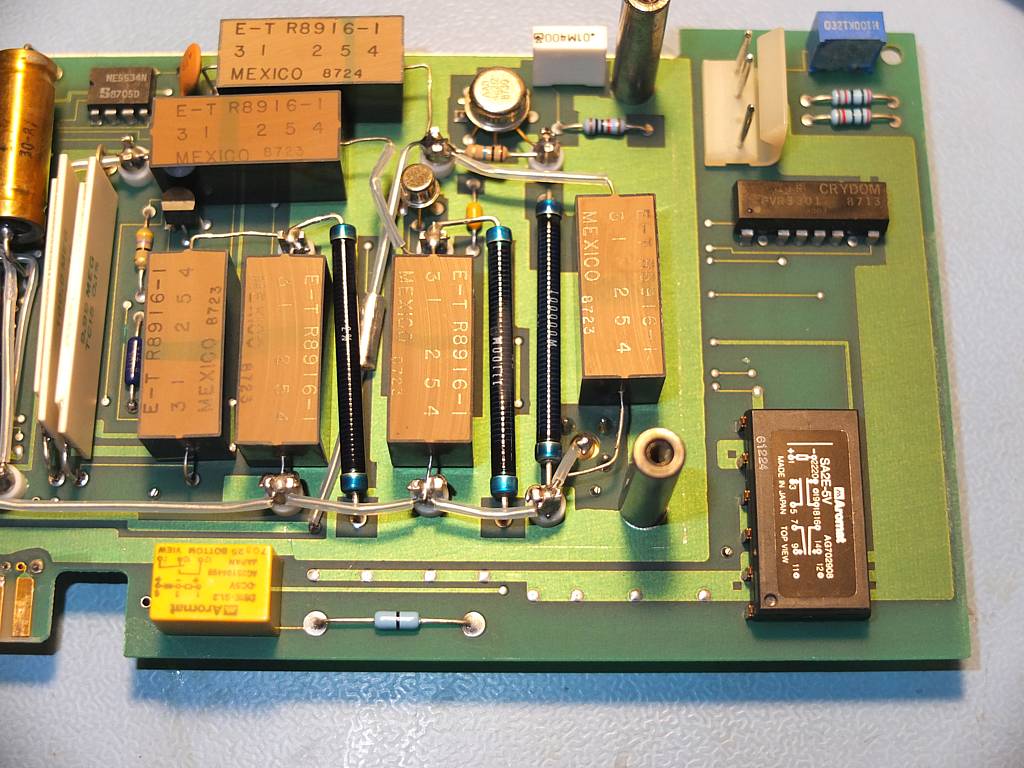
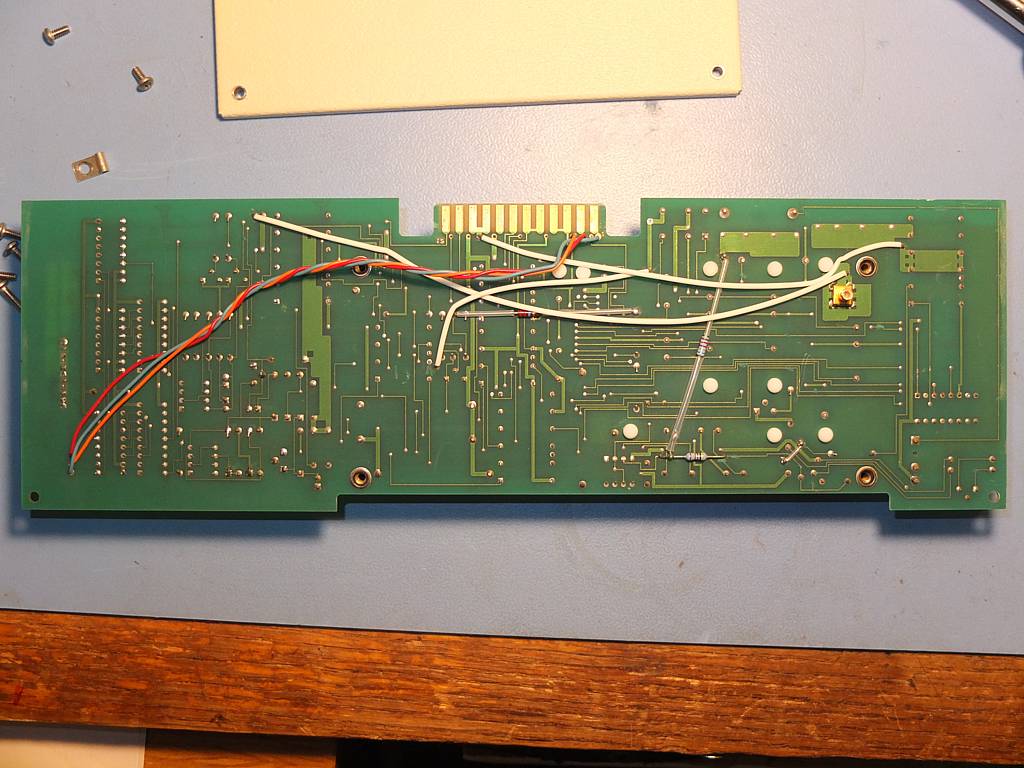
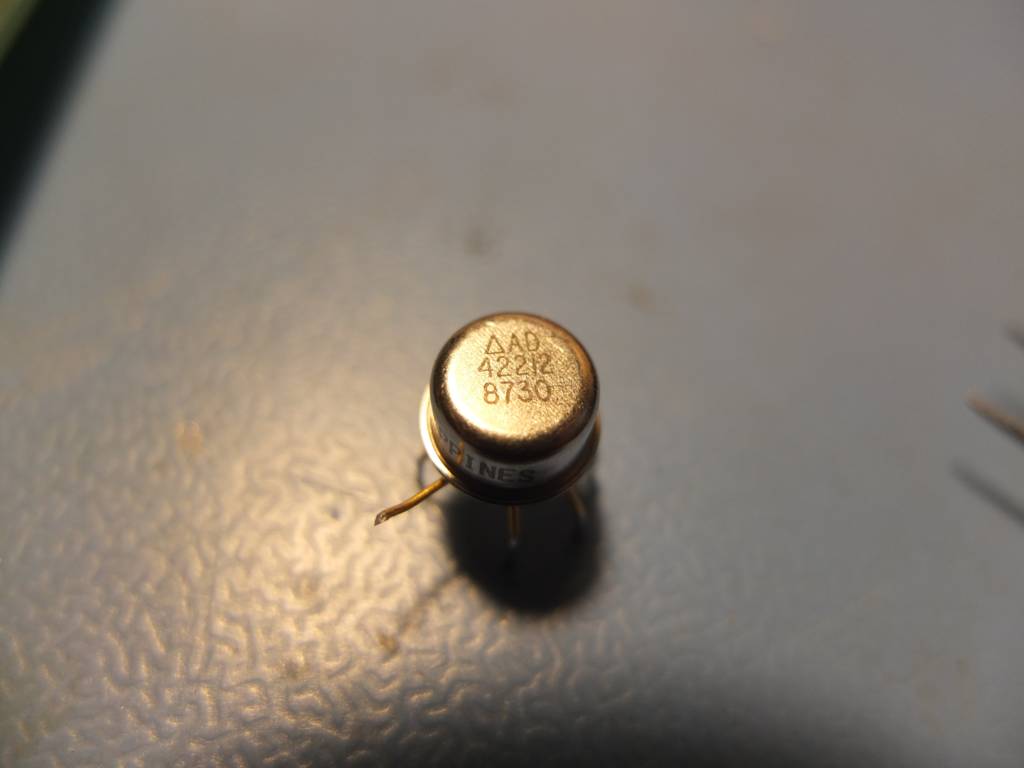
Today I've replaced the electrometer opamp. The result is much better though not quite as good as I've hoped for (if I deliberately run the K263 sandwiched between two hot K2015s, so the temperature on a side panel gets to 35C, the bias current is under 50fA, before it was about 200fA). When the unit has good ventilation the temperature on a side drops to ~28C and the current is steady 9-10fA. Perhaps the other bits in the circuit (relays etc) do add some leakage. I may look at it again in detail when I'll have time - possibly when I'll replace some electrolytic capacitors on the main board, as some are definitely not well as visible on the photos. The AD549L (according to the manual) opamp has a different number on it, most likely a specially selected for the lowest bias current. One definite benefit from using the ADA4530-1 is a much faster recovery of the bias current after overloads and various switching. With the old opamp it could take 10-20 minutes to get back to the minimum current, with the new one - usually under a minute.
Cheers
Alex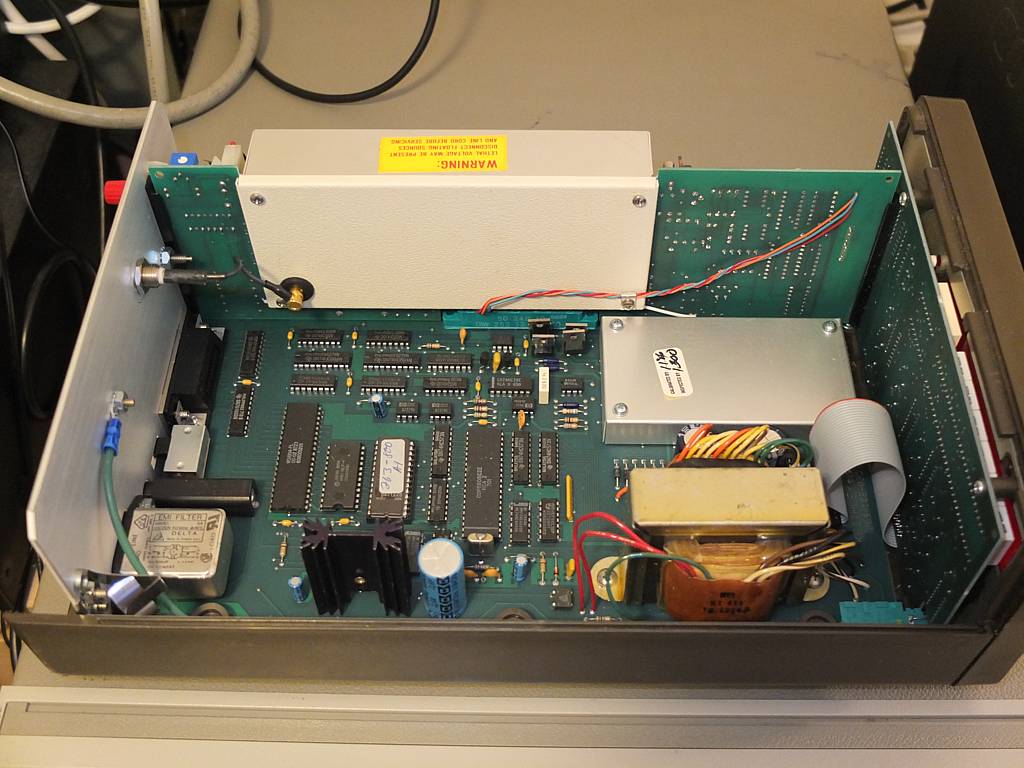
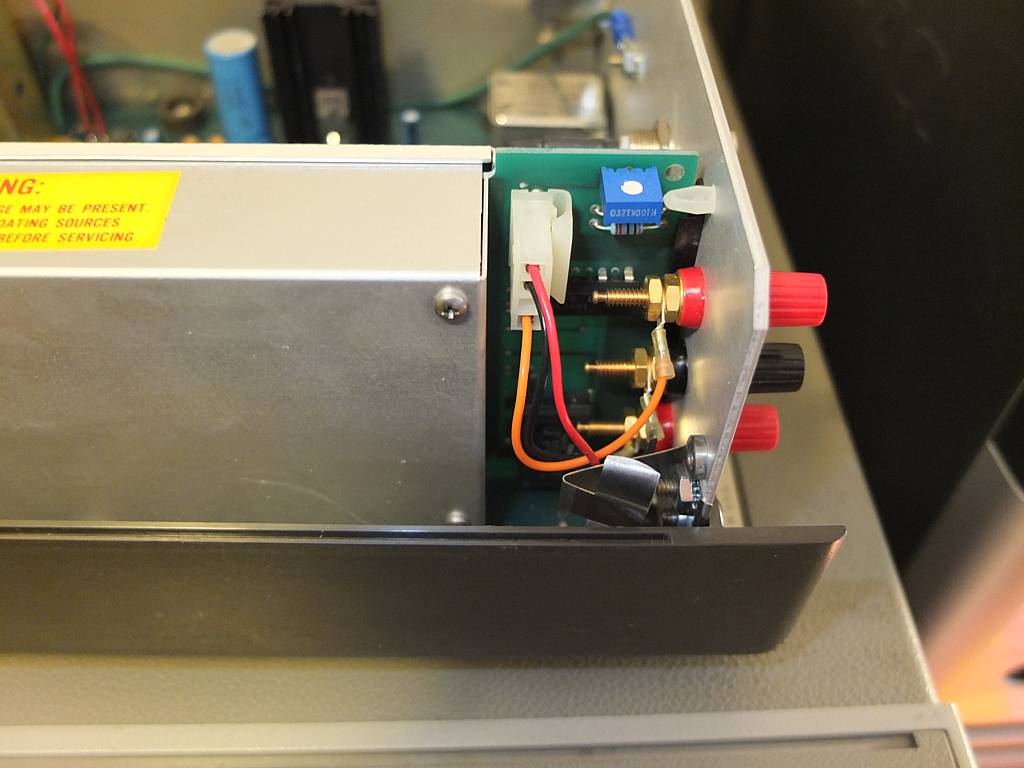
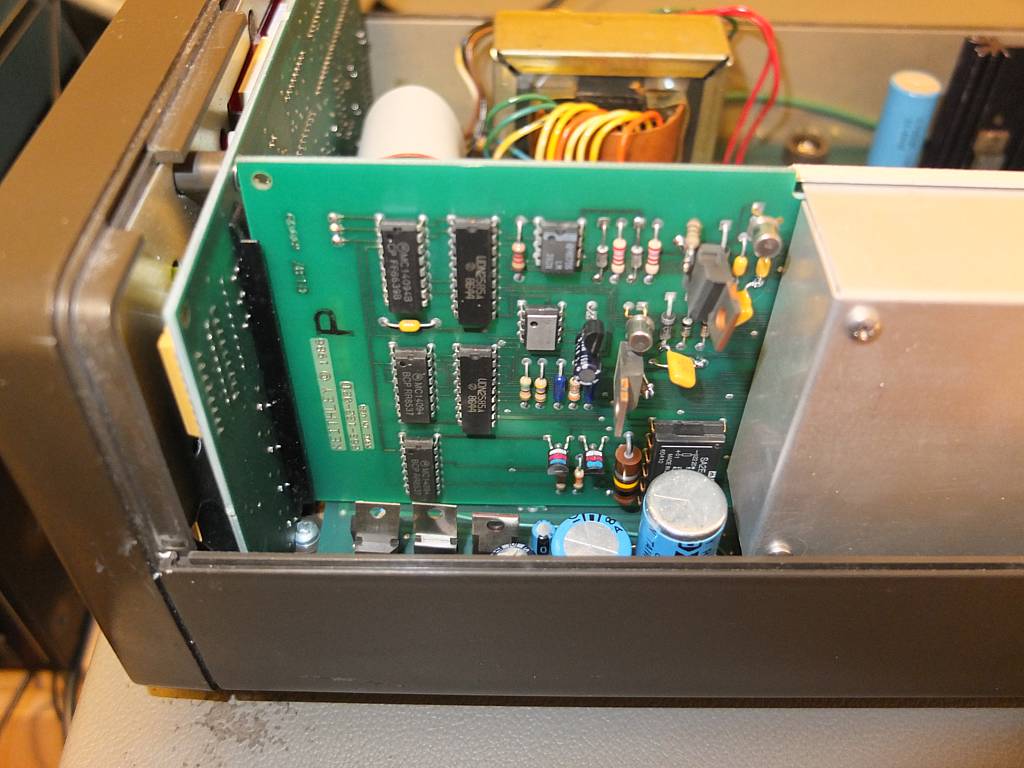

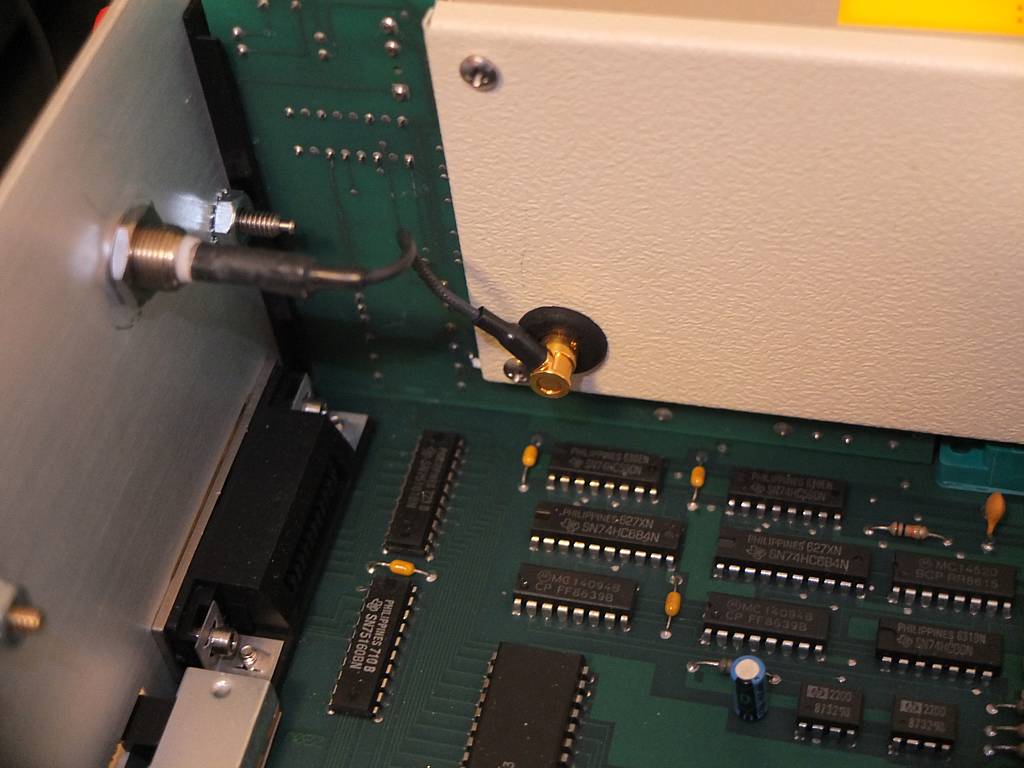

-
Any idea who is the manufacturer of the rectangular relays that short out the high value resistors?
My 263 has cylindrical Coto relays.
I need to source a few of these. -
Yesterday I've tried to re-calibrate the K263 for the first time. The calibration routine is quite straightforward and convenient in a way that separate ranges can be calibrated one at a time without affecting other calibration values. A full calibration including the high value resistances would require two runs - a "cold" and a "hot" - that I'll leave for another weekend. I did calibrate the voltage ranges and lower value resistances (up to 100M) using the Keysight 34465A and got errors below 1LSB across the voltage ranges and <0.005% for the displayed value of the resistors. The output current is now also more accurate down to 200nA range. Before the actual calibration I did a couple of "dry runs" with the calibration switch in the "off" position (including the high Ohm "Ladder" calibration), as it allows to do a calibration that holds till the power cycle and you can see the results immediately without actually overwriting the original calibration. Later I plan to use it to calibrate two Keithley 617 electrometers - one at home and one at work.
Cheers
Alex -
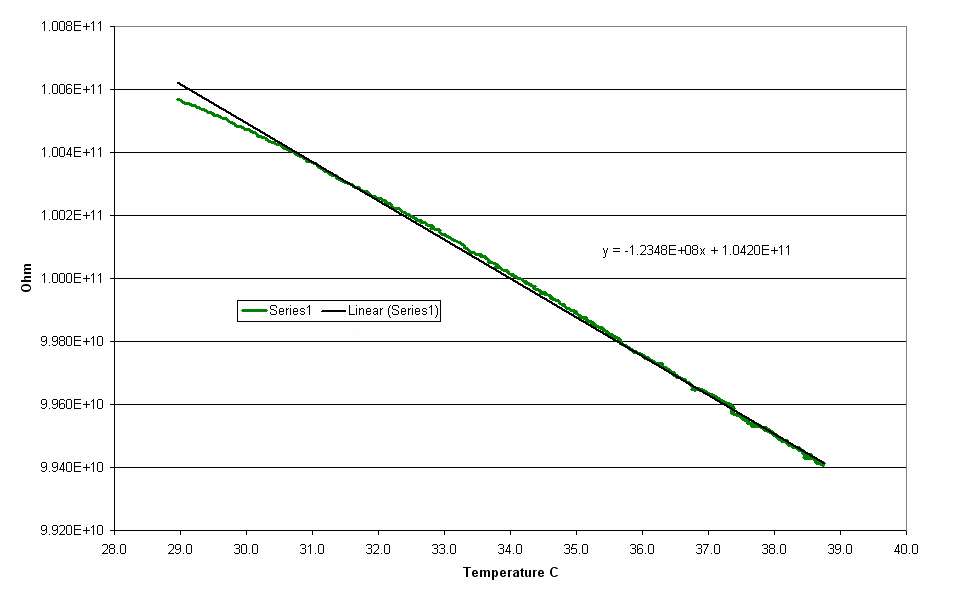
Today I've measured 100G resistance sourced by the Keithley 263 during a warmup from room temperature (22C), using the K617 (well warmed up). The result is somewhat disappointing - the tempco of the internal 100G resistor is over -1200ppm/C (between 29C and 39C) and the internal temperature correction is not compensating for it fully. I am planning now to upgrade the K263 with a hermetic Ohmite RX-1M 100G resistor which has about 6 times lower tempco. Below the results of the test.
Cheers
Alex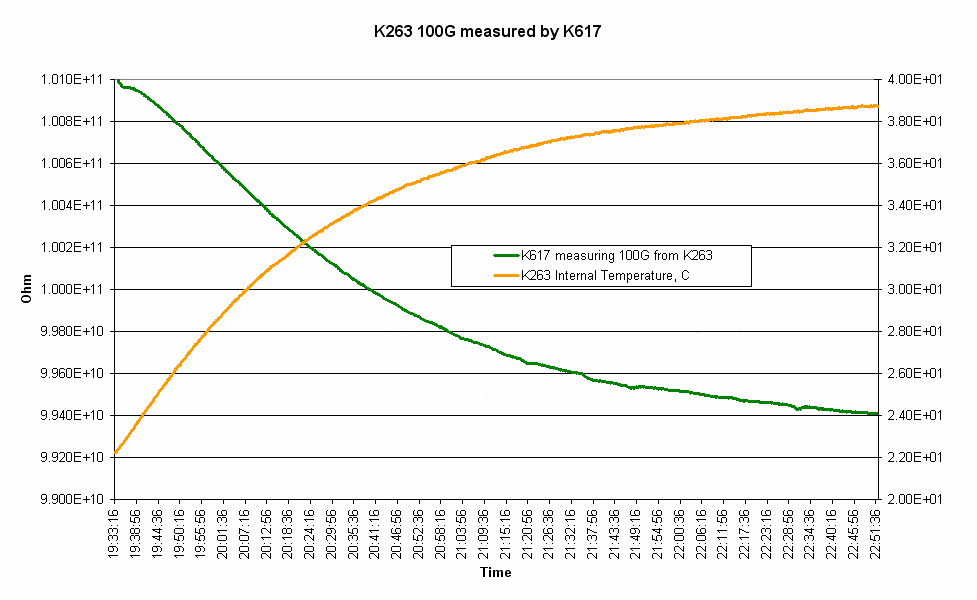
-
I've upgraded the resistors and re-calibrated the Keythley 263 both "cold" and "hot" with very nice results. Here is a 24-hour run - Keysight 34465A measuring 100uA current sourced from Keythley 263, the graph is showing quite a good performance from both units, I think, with less than 10ppm p-p deviation.
Cheers
Alex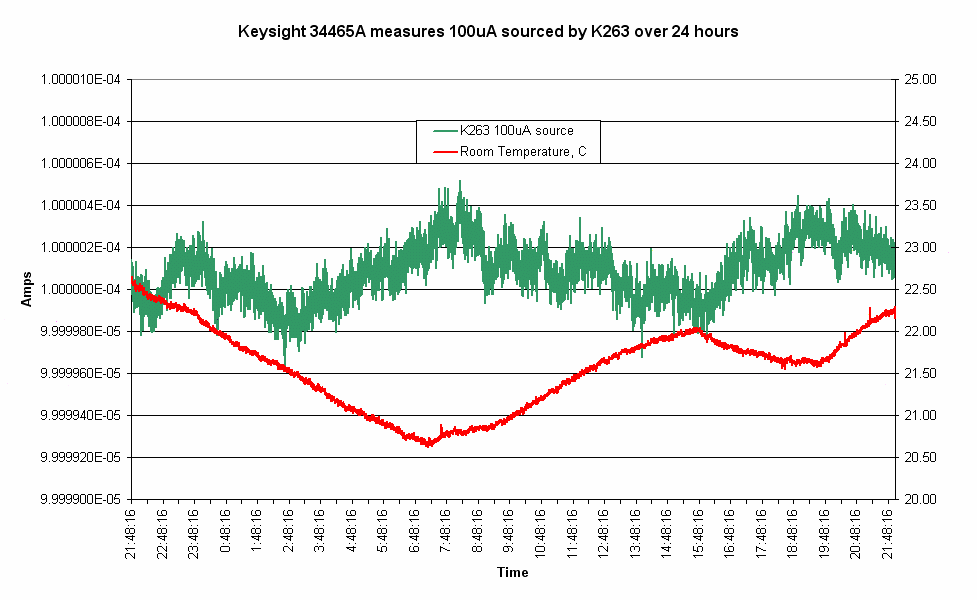
-
And here I'm trying to push the limits of detection. ~20min run, 5min idle, 5min +1fA, 5min -1fA and 5min idle, sourced by Keithley 263 and measured by Keithley 617. The red line is 50 samples running average, vertical scale 1fA/div.
Cheers
Alex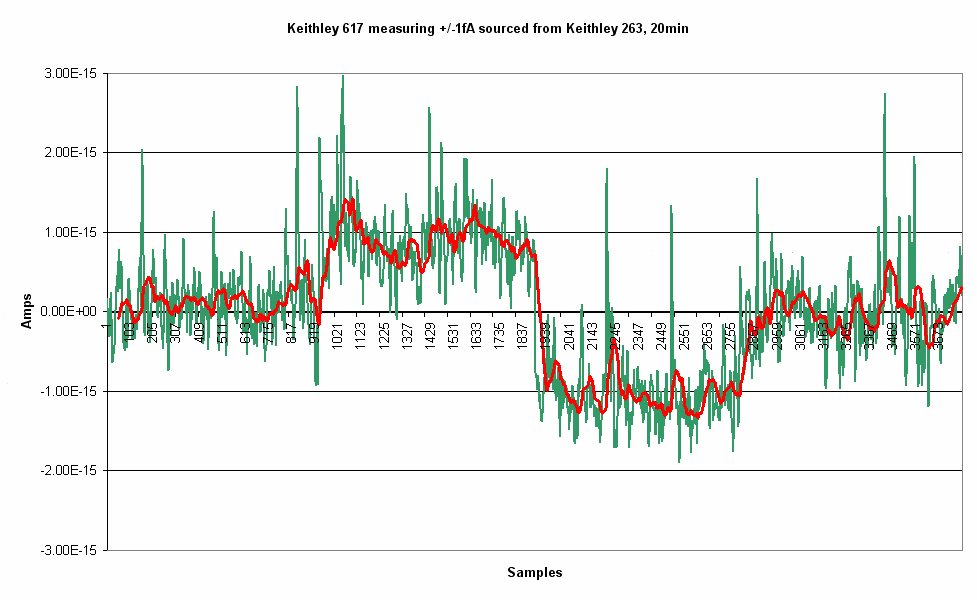
-
Yesterday morning my (used 24/7) Keithley 263 developed a fault: the voltage source got stack at about half-scale 10.7V/1.07V/107mV depending on the output amp gain setting
 . Even without opening the calibrator I've guessed that the output stage of the PWM is dead, so both Q2 and Q3 FETs are conducting all the time and the PWM output is essentially Vref divided by R13/R12 resistors. Either the FETs or U6 driver chip is faulty. Today I've opened the unit and it indeed looks like U6 (TSC426) is kaput. I should receive a replacement chip tomorrow and hopefully the 263 will be back in operation.
Cheers
Alex -
Update - the 263 is back to health after the U6 IC replacement. Thankfully the TSC426 chip is still available from Farnell.
Cheers
Alex -
Yesterday morning my (used 24/7) Keithley 263 developed a fault: the voltage source got stack at about half-scale 10.7V/1.07V/107mV depending on the output amp gain setting
. Even without opening the calibrator I've guessed that the output stage of the PWM is dead, so both Q2 and Q3 FETs are conducting all the time and the PWM output is essentially Vref divided by R13/R12 resistors. Either the FETs or U6 driver chip is faulty. Today I've opened the unit and it indeed looks like U6 (TSC426) is kaput. I should receive a replacement chip tomorrow and hopefully the 263 will be back in operation.
Cheers
Alex
I am curious which resistors you replaced and what resistors were put in their place? -
I've replaced 11G and 100G resistors, using glass encapsulated Ohmite RX-1M series 100G and 10G resistors plus 1G 100ppm/C reistor in series with 10G to make 11G required. The result was about five-six times better tempco on 100G and very low (below 25ppm/C, difficult to measure accurately) tempco on 10G resistor outputs (and associated current ranges as well). The 263 uses a linear compensation technique at low currents and interpolates the displayed value for high-Ohm resistors depending on the continuously measured internal temperature. With better resistors these is less to compensate.
Cheers
Alex -
As the Keithley 263 is at my work lab at the moment, I've measured 1mA current sourced by it on two meters at the same time - Keysight 34465A and HP3458A. The results over two hours are on the graph attached. In general, the 263 is quite stable and accurate. Also nice to see both meters agree with each other down to few ppm.
Cheers
Alex
-
Hello all,
I just also bought a 263.
the instrument works proper exept of the 2µA range. For this range the I do not get an output current. I looked at the the schematics, and found out, that K2 may be defect. Has anyone an idea, where to get this kind of relays Keithley used in this device?
K2 I think is not s shielded one, but looks also not very common. Also the relays e. g. K6, K7 to K11 look really special. Thy are electostacic shielded between the contact and the coil and have very high isolation resitance. I did not find this kind of relays yet. Would be fine, if somebody has an idea, where to get those relay types.
Kind regards
Guido -
Hello all,
meanwhile I checked the analog board of the 263. and I found out, no relay is defect, but the 1M resistor R32 !? How could this happen?
I have build a temporarry replacement of the resitor with a set of metal film resistors and a poti. I adjusted the resitance with my HP 34401 to exact 1Meg Ohm at room temperature.
anyway, I took a few photos:
1st: K263 analg board
2nd: R32 on analog board, defect
3rd: schematic of my temporary replacement of R32
4th: setting 1µA output current at k263 (2µA range) and measure it with K487 (borrowed from Philipp, friend of mine)
I'm going to order a 1M Resistor from Mouser:
https://www.mouser.de/ProductDetail/Caddock/USF370-100M-001-5ppm?qs=sGAEpiMZZMu61qfTUdNhG33Nr1JzxbuNptKv40C8U7I%3D
MFG: Caddock; Spec: TK 5ppm, tolerance 0,01%, pwer max 0,75W; article: USF370-1.00M-0.01%-5ppm
Hope, this helps all other's interested in the K263.
It's a really nice instrument.
Have a nice weekend!
Guido
-
As the K263 performs rather better than expected, my plan is to improve the weakest point in this unit - the electrometer. The chip used - AD549L - was probably the best available at the time as a single chip solution, however the input current is in the area of 30-50fA and this creates a noticeable offset (and noise) in the active current sourcing mode. Also the AD549 does drift with temperature much more than the latest electrometer chips. From the look of it, the circuit allows for a simple upgrade with the ADA4530-1 . The error current can be reduced to less than 1fA and the temperature drift by over ten times. It also should improve the accuracy of the self-calibration routine and remove the null adjustment requirement (as the initial offset of the ADA chip is less than the temperature drift of the AD549 for 1C).
Cheers
Alex
Hello Alex,
I thought about the same, replacing the the AD549 with the ADA4530. It should work, as the AD549 is supplied with about ±8V power supply, generated from V+ and V- rails from the K263. Max rating for the ADA4530 is 16V. The ADA has a lower initial offset, and a lower drift, compared with the AD549.
I have some ADA4530 remaining . I will post results, when I did the update.
Guido
-
Just a very small nit-picky point, and which obviously hasn't mattered in practice - the 27K in your R32 replacement would give more balanced +/- adjustment range if changed to 33K.
The ideal value is 31444 Ohms, so 33K is better than 27K.
Just looking at the 30K nominal part (all but the 820K & 150K):-
31.444K: Adjustment Range: -20.26% to +20.26% Resistance: 23.92K to 36.08K
27K: Adjustment Range: -29.13% to +14.04% Resistance: 21.26K to 34.21K
33K: Adjustment Range: -17.29% to +22.36% Resistance: 24.81K to 36.71K
A very small point I know, but might be worth noting for anyone else wanting to make a trimmable 1M resistor... -
Did you get this off Ebay?