-
Low-cost reference / setup to check and calibrate 5–5.5 digit DMMs?
Posted by
cap4096
on 05 Dec, 2025 15:10
-
Hi,
I have some older bench multimeters (around 5 to 5.5 digits) that I would like to check and, if possible, calibrate myself. I don’t have access to any high-end calibrated DMMs or lab standards.
My main goal is to be able to trust measurements down to about 1 mV when measuring in the 0–30 V range (DC). I’m not doing formal calibration for certificates, just trying to get my meters reasonably accurate and consistent.
I found this Analog Devices board:
https://www.analog.com/en/resources/evaluation-hardware-and-software/evaluation-boards-kits/eval-adr1001.html#eb-overviewWould this board be usable for my needs, or is it the wrong tool for the job?
If it’s not suitable, what alternatives would you recommend in roughly the same price range, up to about USD 250?
Thanks in advance for any guidance.
-
#1 Reply
Posted by
EC8010
on 05 Dec, 2025 15:28
-
Yes, and no. Yes, because it provides a very stable voltage. No, because that voltage is uncalibrated; it will be somewhere near stated voltage, but not accurate enough for your use unless you can take it to someone who has a calibrated meter who can measure it for you.
No matter what you do, your issue will always be calibration. If you buy a new 6 1/2 digit meter (expensive), it will be calibrated. You could then periodically check it against an ADR1001 to see if they diverge. At that point, you don't know which has diverged. Thus, serious laboratories have three 8 1/2 digit meters so that they know which one not to trust if there's a significant divergence. In the end, the real issue is consistency. If all your meters read the same, that's often good enough. Requiring genuine accuracy always works out expensive.
-
#2 Reply
Posted by
cap4096
on 05 Dec, 2025 15:35
-
Thanks!
You are right, there might be better alternatives for my need.
-
#3 Reply
Posted by
tggzzz
on 05 Dec, 2025 16:19
-
To put another light on ec8010's reply...
It is cheap and (relatively) easy to get all your meters to agree with each other. It is expensive and difficult when you want them to agree with other people's meters.
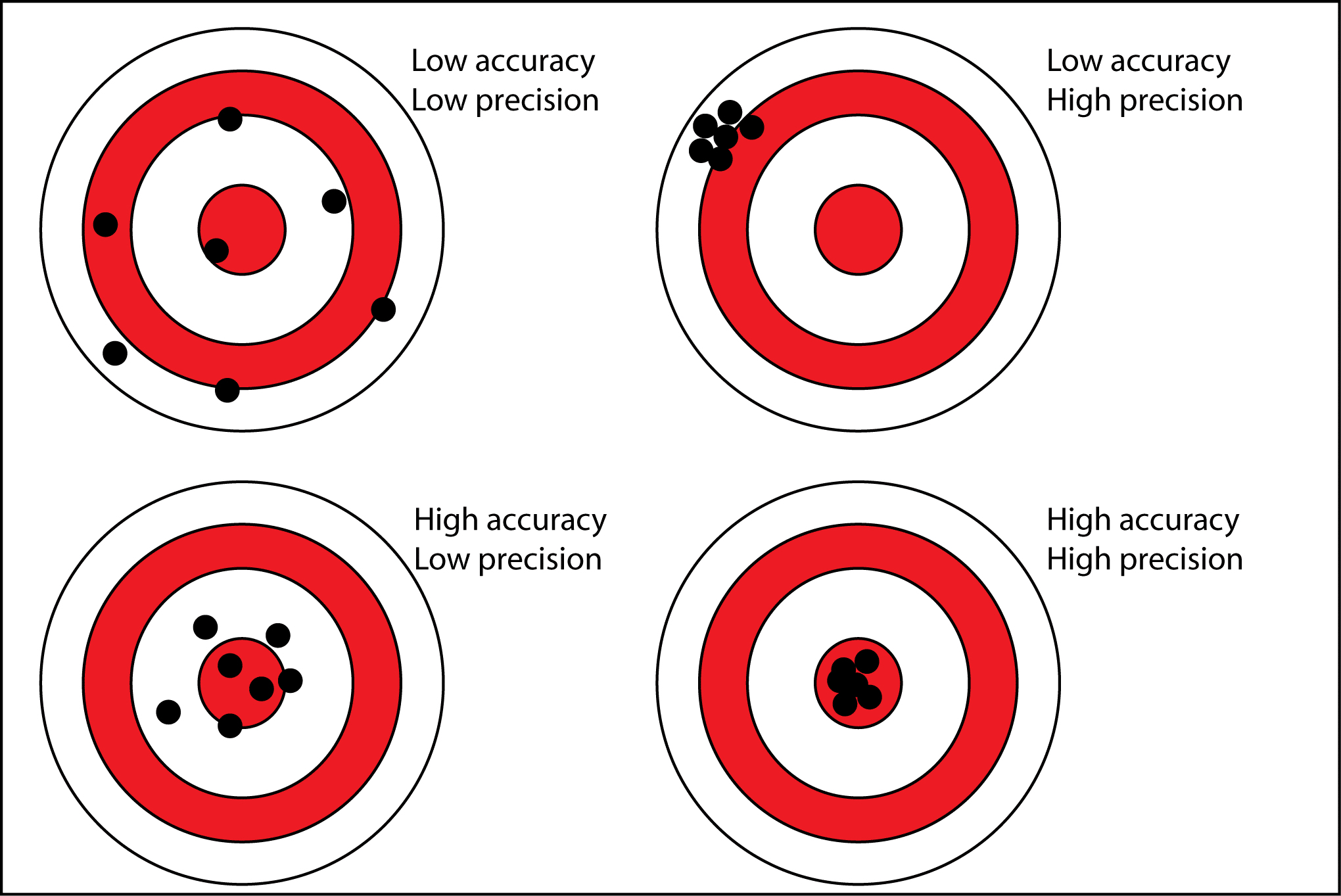
For most purposes, precision and resolution and (especially) stability are more important than accuracy.
-
#4 Reply
Posted by
Kleinstein
on 05 Dec, 2025 16:34
-
For an absolute value there are relatively cheap reference modules (usually based on AD584) that provide 2.5 / 5 / 10 V with measured values measured by an unofficial Chinese site. Ideally this could be good enough, but there are also some with fake numbers.
One could still do a check from the ratio: fake numbers tend to be wrong with the ratios.
It still depends one the meter if 2.5 V is OK, as some 5 digit meters may have a 2 V prime range.
The reference would ony be good for 1 or 2 ranges. So it would only be a rather limited check.
-
-
Buy it, age it for a month and then message me. I'll take care of it.
TomG.
-
#6 Reply
Posted by
TUMEMBER
on 05 Dec, 2025 17:16
-
Buy it, age it for a month and then message me. I'll take care of it.
TomG.
Almost exactly like that, only you forgot to add "and leave the module power on" it has to "get old" and stop drifting quickly - because it will always drift, just not as fast.

-
-
I've been doing this for so long that it never occurred to me that one would buy it and leave it on the shelf to "age". Sigh, well if we're at that level, yes, here we go:
Step 1: Buy device.
Step 2: Connect device to stable power source.
Step 3: Leave on uninterrupted for at least 1 month to get rid of initial much larger drift.
Step 4: PM me.
Step 5: Use it to calibrate your meter.
Best Regards,
TomG.
-
-
Step 4: PM me.
All US members start chanting,
@CalibrationGuy is organising a US CalClub. ;-)
-
-
Step 4: PM me.
All US members start chanting, @CalibrationGuy is organising a US CalClub. ;-)
Oh boy.....
-
#10 Reply
Posted by
TUMEMBER
on 05 Dec, 2025 18:48
-
I've been doing this for so long that it never occurred to me that one would buy it and leave it on the shelf to "age". Sigh, well if we're at that level, yes, here we go:
Step 1: Buy device.
Step 2: Connect device to stable power source.
Step 3: Leave on uninterrupted for at least 1 month to get rid of initial much larger drift.
Step 4: PM me.
Step 5: Use it to calibrate your meter.
Best Regards,
TomG.
You've just created and published a PROCEDURE! This is compliant with the Quality Manual and "good metrological practices"—maybe even with IEC17025.
This is how it is that obvious things escape long-term practice and become a "barrier" for those new to the "field".

It's always important:
- what (co?)
- with what (czym?)
- how (jak?)

damn, it sounds better in Polish somehow
-
-
Funny you mentioning IEC/ISO17025. We are being audited in 2 weeks for our annual ISO17025 certification visit. I guess my mind was thinking about procedures when typing the post.
TomG.
-
#12 Reply
Posted by
GigaJoe
on 05 Dec, 2025 20:58
-
not only to have 5V reference, but much more
I mean for DIY at home adjustment need a voltage source up to 1000V, resistance decade, current source.
more interesting even in AC region , like 750V 1 Kilohertz voltage source , or 2-3A AC 1Khz current source ... and it should be relatively low noise source.
otherwise LSD simply bouncing like ping-pong.
-
#13 Reply
Posted by
Simmed
on 06 Dec, 2025 04:01
-
Step 4: PM me.
All US members start chanting, @CalibrationGuy is organising a US CalClub. ;-)
hmmm
my understanding is that there is already a US Cal club using Tin's ref
so
this has got to be the Calguy Cal Club (CCC)

-
#14 Reply
Posted by
J-R
on 06 Dec, 2025 07:00
-
What bench DMMs do you have? It's probably not realistic to go for a complete calibration/adjustment, due to the high voltage & high frequency inputs as mentioned by others. But if you primarily only need 30VDC, that can be easily done but you'll need something to use as a calibrated reference.
I suggest the DMMCheck Plus because of the included voltage, current and resistance references. Since the resistors are all connected together in a row, you can use them as a precision divider with the built-in voltage/current references as well as external unknowns. You do have to be careful to not heat the resistors at all, so ensure low currents and only brief usage.
However, ultimately, what you are trying to accomplish is not trivial to do correctly and so a possible better path is to simply purchase another bench DMM with a valid calibration (and ideally data) and use that instead.
-
#15 Reply
Posted by
EEVblog
on 06 Dec, 2025 07:51
-
I have some older bench multimeters (around 5 to 5.5 digits) that I would like to check and, if possible, calibrate myself. I don’t have access to any high-end calibrated DMMs or lab standards.
Just use a power supply and hook them all in parallel, if they all read the same then you can be pretty much 100% confident that they are all perfectly within calibration.
The odds of them all being out by precisely the same amount is basically zero.
-
-
Step 4: PM me.
All US members start chanting, @CalibrationGuy is organising a US CalClub. ;-)
hmmm
my understanding is that there is already a US Cal club using Tin's ref
so
this has got to be the Calguy Cal Club (CCC)
I calibrated the cal club's reference built by Tin. I assigned the new value which was very close to the value printed on it when we got it. So if that's going on, you can use that reference.
A good point was made about needing other standards. I will say that the original poster wanted to have a reference that would validate a 30 volt dc ange. A ten volt reference would not be up to the task of validating a thirty volt range to 1 millivolt precision. Even if you had a calibrated dmm, you would still need a power supply that could provide up to thirty volts dc. To get under the $250 threshold, you could buy a fluke 8840 from ebay, a cheap power supply from amazon and a NIST calibration from a local lab.
TomG.
-
-
I have some older bench multimeters (around 5 to 5.5 digits) that I would like to check and, if possible, calibrate myself. I don’t have access to any high-end calibrated DMMs or lab standards.
Just use a power supply and hook them all in parallel, if they all read the same then you can be pretty much 100% confident that they are all perfectly within calibration.
The odds of them all being out by precisely the same amount is basically zero.
Let's play devil's advocate and say that the meters are all within ten millivolts of each other at thirty volts. Which one would be the correct one? The original poster said he wanted to be accurate to within one millivolt at 30VDC.
TomG.
-
#18 Reply
Posted by
EEVblog
on 06 Dec, 2025 08:34
-
I have some older bench multimeters (around 5 to 5.5 digits) that I would like to check and, if possible, calibrate myself. I don’t have access to any high-end calibrated DMMs or lab standards.
Just use a power supply and hook them all in parallel, if they all read the same then you can be pretty much 100% confident that they are all perfectly within calibration.
The odds of them all being out by precisely the same amount is basically zero.
Let's play devil's advocate and say that the meters are all within ten millivolts of each other at thirty volts. Which one would be the correct one? The original poster said he wanted to be accurate to within one millivolt at 30VDC.
"just trying to get my meters reasonably accurate and consistent."
1mV in 30V is 0.003% accuracy, out of the class of any 5.5 digit DMM accuracy.
-
#19 Reply
Posted by
J-R
on 06 Dec, 2025 08:57
-
The OP might have something like the HP3478A which has 303,099 counts and a solid reference so 1mV at 30V should be a realistic target in my opinion. Specifications versus real world performance can't be ignored and something that consistently draws me to quality gear.
Since we are in the metrology board, I say boo hiss on the idea of just lining things up and calling it good!
-
#20 Reply
Posted by
tggzzz
on 06 Dec, 2025 09:15
-
Step 4: PM me.
All US members start chanting, @CalibrationGuy is organising a US CalClub. ;-)
hmmm
my understanding is that there is already a US Cal club using Tin's ref
so
this has got to be the Calguy Cal Club (CCC)
I calibrated the cal club's reference built by Tin. I assigned the new value which was very close to the value printed on it when we got it. So if that's going on, you can use that reference.
A good point was made about needing other standards. I will say that the original poster wanted to have a reference that would validate a 30 volt dc ange. A ten volt reference would not be up to the task of validating a thirty volt range to 1 millivolt precision. Even if you had a calibrated dmm, you would still need a power supply that could provide up to thirty volts dc. To get under the $250 threshold, you could buy a fluke 8840 from ebay, a cheap power supply from amazon and a NIST calibration from a local lab.
TomG.
Another trick is to notice that resistors (and especially ratios) can be much more accurate than most voltage sources. For example, I have a 7 decade KVD which even I can measure is accurate to ~1ppm.
Hence have a stable HV (up to 1kV in my case) voltage source, divide it down and compare it with an accurate LV source, typically 10V or 1.0186V

Use a 2% analogue meter to do the comparison. Since you know the division ratio, you know the HV voltage.
We had to use that technique during school physics lessons, to measure voltages to 0.1% using a 2% meter and 1m of resistance wire and a steel rule.
-
#21 Reply
Posted by
EEVblog
on 07 Dec, 2025 05:50
-
Since we are in the metrology board, I say boo hiss on the idea of just lining things up and calling it good!
Sure, but that's not what the OP asked for.
In any case, the first step is to do what I said, compare all the meters (after warmup) and post the difference. The OP might find there is bugger all difference between them, in which case, job done.
If all the 5.5 digits meters are within a few counts for example, then it's arguably pretty pointless to do adjust them.
-
#22 Reply
Posted by
iMo
on 07 Dec, 2025 07:57
-
OP wants to "calibrate", not to "adjust" them.
BTW, for $250 there is no chance to get an equipment for calibrating all ranges of a 5-5.5d meters, imho..
-
#23 Reply
Posted by
antenna
on 07 Dec, 2025 09:34
-
I wonder if there is some material that could be used similarly to this low accuracy example. An optical system compares the refracted color from anodized titanium at two voltages, and when the vikings purple matches, we know there is a difference of 67v-17v=50v between the two anodes. Obviously, this is inaccurate. There has to be some readily observable phenomenon that has a distinct energy gap without it costing a fortune to observe accurately.
-
#24 Reply
Posted by
TUMEMBER
on 07 Dec, 2025 10:01
-
What bench DMMs do you have? It's probably not realistic to go for a complete calibration/adjustment, due to the high voltage & high frequency inputs as mentioned by others. But if you primarily only need 30VDC, that can be easily done but you'll need something to use as a calibrated reference.
However, ultimately, what you are trying to accomplish is not trivial to do correctly and so a possible better path is to simply purchase another bench DMM with a valid calibration (and ideally data) and use that instead.

After all, he definitely defined the base amount and the range he's interested in:
$250 and
30 VDC. That's all. Not AC, not Hz, not Ohms, not AAC, not ADC. Why bother? Dave first outlined the basics – comparing them and determining whether they all fall within the manufacturer's declared permissible error. Let him buy three 9V BLOCK batteries, measure one battery with all the meters, calculate the deviation, and compare it to the manufacturer's declared error. Similarly, for two batteries connected in series, then for three in series. If all the meters are within the permitted error limits, he can continue to consider which calibrator to buy.
Once you've passed this "accuracy verification" stage, you can build something like the one in the attached application note (a 30 V DC cascade circuit) and see how one module works in the Excel file I've attached.
I'd gladly take $250 for such a small job.