-
I think the more useful characteristic is the vapour "height", which seems mostly to be controlled by temperature/injected energy. The better you can control the vapour height, the better your oven will be.
That might be the reason for the three level temperature sensoring, might be necessary for a good level control indication. -
Ok, so I've been reading the manual of the weller WAM3000 very carefully, and here is my guess at how it works. Also, nailed down some parameters I think would be reasonable to aim for. See attached for the diagram taken from the weller manual here: http://www.egmont.com.pl/cooper/instrukcje/OI_WAM3000_GB.pdf
The weller machine supports a 300x300x55mm board. I'm guessing the air space cross section in the chamber is maybe 350x350mm ? It also supports a load of maximum 1kg. I have some medium sized steppers lying around from a different project which are rated at about ~3 Nm, so with a small sprocket and chain drive it should easily be able to lift 1kg+1kg platform. This seems like a pretty good target load.
The machine drawing appears to be to scale (all of the external dimension ratios match the machine specs). From this, I have the following very rough measurements:
Full chamber (including gated zone but not including fluid container): 360mm high, 350mm square
Gated location: 120mm from the top of the fluid container
Fluid container: 40mm high, 200mm square
First, you have three sensors. I'm going to assume these are thermocouples, given that the vapour is optically transparent and is extremely chemically inert. The right thermocouple should hopefully have a fast enough response time. (Maybe using those fairly recent 4x4 thermopiles or something could be interesting here. melexis is the company iirc?). Level 1 is closest to the heater at the bottom.
Here are the basic steps:- Heat the vapour phase fluid until Level 1 reaches the defined preheat temperature
- Open the top door, put your populated board onto a mesh platform. Close the door and press go
- The board is lowered approximately to the level 2 sensor and the gate above the level 3 sensor is closed
- Heat is applied to the fluid until Level 3 reaches the defined finish temperature. The vapour will not rise that high unless the PCB is unable to absorb any more heat; this means that basically condensation has stopped and the solder should be fully reflowed
- Heat is reduced and external cooling fans are turned on. After level 2 drops below a defined temperature, the gate will be opened and the mesh platform will be lifted
- Enjoy your freshly soldered PCB!
PS while I'm not saying anyone should throw out your soldering irons, have you seen the price of the high end weller/pace/ersa/metcal gear? It makes the fluid look very cheap in comparison! I think that an entire DIY vapour phase setup (with fluid) would cost less than one of my weller stations, and I have two of them!
-
So, i think we have a good solution for our vapour fluid. ( further distilled Galden HT230 ). Time to move on a little.
Theres a lot of variables here, that we don't have a good handle on. but some guidance from the commercial machinese is helpful.
Heres my thoughts on the other topics.
(a) the Weller and that other machine we saw, both suggest using about 1kg of Fluid in their machines, Thats only about 600ml. My suspision is that you don't need much fluid to make quite a lot of vapour.
(b) the commercial machines all seem to have a small "well" in the bottom of their tanks, you don't need to cover the entire base
(c) Heating almost certainly should be by some kind of external heater rather than an immersion one. Plenty of options there, and it really needs to be closed loop control system. We want to provide enough energy, but not too much. For experimentation purposes I'm thinking that it will be very useful to measure temp at several locations.. I'm thinking
- in the fluid to be boiled
- on a aluminium block that can be raised and lowered, this in many ways can be used to simulate your 'load'.
- Some sensors further above the vapour.
My feeling is that if we cafefully control the heating, then vapor loss is going to be minimal. Look at this video ( ). There is nothing elaborate about their 'tower'.
Time to stop talking and order some fluid and get started.
-
So, i think we have a good solution for our vapour fluid. ( further distilled Galden HT230 ). Time to move on a little.
Theres a lot of variables here, that we don't have a good handle on. but some guidance from the commercial machinese is helpful.
Heres my thoughts on the other topics.
(a) the Weller and that other machine we saw, both suggest using about 1kg of Fluid in their machines, Thats only about 600ml. My suspision is that you don't need much fluid to make quite a lot of vapour.
(b) the commercial machines all seem to have a small "well" in the bottom of their tanks, you don't need to cover the entire base
(c) Heating almost certainly should be by some kind of external heater rather than an immersion one. Plenty of options there, and it really needs to be closed loop control system. We want to provide enough energy, but not too much. For experimentation purposes I'm thinking that it will be very useful to measure temp at several locations.. I'm thinking
- in the fluid to be boiled
- on a aluminium block that can be raised and lowered, this in many ways can be used to simulate your 'load'.
- Some sensors further above the vapour.
My feeling is that if we cafefully control the heating, then vapor loss is going to be minimal. Look at this video ( ). There is nothing elaborate about their 'tower'.
Time to stop talking and order some fluid and get started.
The weller has a sensor in the fluid as well. And to simulate your load, why not just get an already soldered PCB?
I am going to try 1/4" ASTM420 stainless ball bearings in a pyrex beaker (currently in the mail) and an induction hot plate; I think this alloy will work. I'm also trying to get a board manufactured with some 0.5mm pitch BGAs for testing, but that's proving to be quite difficult (in fact, at this stage one board would cost more than 1kg of galden due to the 3/3mil traces required).
Also, from that video:
chain driven lift: check
linear guides: check
guides don't extend all the way into the fluid, but get close: check
Unfortunately though I am away from home for a month, so no playing with toys for me.
-
Quote
The weller has a sensor in the fluid as well. And to simulate your load, why not just get an already soldered PCB?
because i'll be able to easily make a nice fitting for a thermocouple and it will be completely consistent.
-
Ok, so I've been reading the manual of the weller WAM3000 very carefully, and here is my guess at how it works.
I am with you untill the level the board is lowered to.
My gut feeling (nothing more so another guess) tells me that the three sensors are covering the entire heating volume so the lowest sensor is the bottom and the highest sensor is the top, so the middle sensor is the middle and that should be the location of the pcb (my guess).
So if the highest sensor reaches the set temperature or above all power should be cut because vapor is then escaping the zone, just my guess to it if I should build it. -
Ok, so I've been reading the manual of the weller WAM3000 very carefully, and here is my guess at how it works.
I am with you untill the level the board is lowered to.
My gut feeling (nothing more so another guess) tells me that the three sensors are covering the entire heating volume so the lowest sensor is the bottom and the highest sensor is the top, so the middle sensor is the middle and that should be the location of the pcb (my guess).
So if the highest sensor reaches the set temperature or above all power should be cut because vapor is then escaping the zone, just my guess to it if I should build it.
Hrm, I can see your point, but I would worry that the second sensor has a much faster thermal time constant than the PCB itself, and would report being fully heated well before the PCB is. The sensor is mounted in the wall remember, not on the PCB.
I think I read somewhere (I can't find it now any more) that asscon uses the third level as the end-of-soldering sensor. And I suppose it isn't possible to lose any fluid or vapour if the gate is properly sealed.
But of course, both of these things would be easy to verify with a real system, so it should just be a case of trying them both. Thanks for your input. -
Hrm, I can see your point, but I would worry that the second sensor has a much faster thermal time constant than the PCB itself, and would report being fully heated well before the PCB is. The sensor is mounted in the wall remember, not on the PCB.
And you wondered why i wanted to put a thermal sensor in a block of alluminum. To give it some thermal mass.
I'm also pretty convinced that there is minimal need to actually have the shutter system. I'm sure that the vapour height can be controlled pretty well. and that in a reasonably well controlled system the vapour won't escape the tank anyway. The systems with shutters are doing it for a different reason. They are blowing air across them, which is for cooling, and from what i see they are looking to cool the boards quickly for inline systems. for doing low voume batch work, this doe'snt seem to be a requirement.
Control here, is critical.
-
Hrm, I can see your point, but I would worry that the second sensor has a much faster thermal time constant than the PCB itself, and would report being fully heated well before the PCB is. The sensor is mounted in the wall remember, not on the PCB.
And you wondered why i wanted to put a thermal sensor in a block of alluminum. To give it some thermal mass.
I'm also pretty convinced that there is minimal need to actually have the shutter system. I'm sure that the vapour height can be controlled pretty well. and that in a reasonably well controlled system the vapour won't escape the tank anyway. The systems with shutters are doing it for a different reason. They are blowing air across them, which is for cooling, and from what i see they are looking to cool the boards quickly for inline systems. for doing low voume batch work, this doe'snt seem to be a requirement.
Control here, is critical.
Actually, I was wondering why because aluminium has far too good thermal conductivity. Fibreglass has a thermal conductivity of something like 0.05 while aluminium has a conductivity of ~200 W/(m.K). So given this large difference (X 4000) you could possibly tune your control loops for the wrong parameters, and you might not be able to find hotspots in the oven because the aluminium will hide that.
Why fake the load if you can just have a real one? It is a common thing to mount thermocouples on PCBs.
I think the gate on the weller machine is mostly for safety. It isn't an inline system. -
Even the inline vapor-phase machines aren't continuous, they are more like a buffered batch system.
The reflow profile should control both the heating and cooling steps for uniformity and to save the components. -
Sorry to jumping in without having read all those previous pages in details.
Looks a cool project, I´m wondering if it would be possible to get a cheap liquid and change the boiling point by changing the (vapor) pressure in the chamber:
Form Wiki: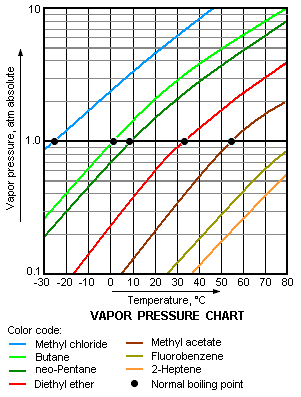
http://en.wikipedia.org/wiki/Vapor_pressure
Take for example mineral oil:
http://www.sciencelab.com/msds.php?msdsId=9927364QuoteBoiling Point:310°C (590°F)
Vapor Pressure:<0.1 kPa (@ 20°C)
so if we create a negative pressure in the chamber (below 1 bar absolute) then it should be possible to get the 230°C boiling point or whatever you want. By then rising the pressure to the atmosferic one the vapor will turn into liquid and ready to take the final product out.
Surely there is a big elephant I am overlooking...
PS: OK, I got it. The solder melting point depend also on ambient pressure... another idea in the garbage can?
PS2: Anyone knows the solder melting point graph temperature vs pressure? I couldn´t find nothing on the www. -
Looks a cool project, I´m wondering if it would be possible to get a cheap liquid and change the boiling point by changing the (vapor) pressure in the chamber:
You do not need to change the boiling point of the liquid, you need to have the temperature at 230oC for the solderpaste to melt
If I vacuum soup or water in a bag in my vacuummachine for instance it starts boiling at room temperature, but if there was an egg inside the soup it would not get hard boiled not even after an hour.
So you approach this the wrong way around I am afraid. -
Looks a cool project, I´m wondering if it would be possible to get a cheap liquid and change the boiling point by changing the (vapor) pressure in the chamber:
You do not need to change the boiling point of the liquid, you need to have the temperature at 230oC for the solderpaste to melt
If I vacuum soup or water in a bag in my vacuummachine for instance it starts boiling at room temperature, but if there was an egg inside the soup it would not get hard boiled not even after an hour.
So you approach this the wrong way around I am afraid.
You could use a pressure pot and a liquid with lower than 230C boiling point. Increasing the pressure increases the boiling point.
-
If I vacuum soup or water in a bag in my vacuummachine for instance it starts boiling at room temperature, but if there was an egg inside the soup it would not get hard boiled not even after an hour.
Uh? If the boiling point if bigger than 230 C (mineral oil) than you need to lower the pressure.
So you approach this the wrong way around I am afraid.
I am sure if you read again my post you will understand. If you have any questions I am glad to help -
You'd have to find something chemically inert, because evaporating flammable liquids is a great way to get an explosion. But realistically I think all the added complications of containing a lower (or higher) pressure make it a far worse alternative than just paying for the inert, non-toxic, ambient pressure stuff. The price will come down the more popular it gets, and with a suitable apparatus you won't need much of it nor will you lose any during operation.
-
Sorry to jumping in without having read all those previous pages in details.
Yep. SAFETY
Looks a cool project, I´m wondering if it would be possible to get a cheap liquid and change the boiling point by changing the (vapor) pressure in the chamber:
Surely there is a big elephant I am overlooking...
This WHOLE thread is worthy of reading and this nicely sums up what is required:You'd have to find something chemically inert, because evaporating flammable liquids is a great way to get an explosion. But realistically I think all the added complications of containing a lower (or higher) pressure make it a far worse alternative than just paying for the inert, non-toxic, ambient pressure stuff.
When I wanted to get into SMD, a rework station cost more than a litre of Galden.
-
Jeremy,
Apropos the stainless steel balls.. there aretwo types of steel generally speaking .. austenitic and martensitic. The type is dependent on the manufacturing process how these metalurgical properties are developed ( crystaline structure which affects how the magnetic domains are established and formed.
This also applies to stainless steel. Some alloys are magnetic others are not.
300 series alloys are not magnetic where as 400 series alloys of stainless steel are.
On the question of temperature measurement: addition of aluminium heat sink to the thermocouple would only detract from the quality of temperature measurement and subsequent tightness of the control loop.
Temperature of the vapour cloud is unimportant so long as the cloud exists, gets "consumed" and is replenished from the boiling liquid.
Essentially the only reasonone would measure the temperature of the space where the cloud is to form is to confirm it has formed.
As the fluid is heated the volume of the cloud increases but it's temperature remains constant as all the energy is consumed in evaporating the fluid.
So simply use the measurement of temperature to confirm the probe is immersed in the cloud .
With a batch oven a tall batch oven the cloud needs to be stratified and the way to do it is to set up energy sinks and sources which would contain the cloud; namely a heater and a cooling jacket which will place a lid on top of the cloud.
The cooling jacket will cause vapour to condense and drip back into the fluid reservoir. Vapour pressure will tend to level off any un evenness in the vapour layer by ensuring a continuous interface between the vapour jacket and the cooling jacket.
This equilibrium will ensure a uniform blanket of vapour into which the PCB needs to be immersed.
The space above the vapour layer will be at increased temperature through natural convection of air and it is this volume above the vapour that is used as preheat and cooling zone.
This is my understanding and I shall be making an oven in line with this understanding.
I have made some enquiries with a local sheet metal shop and stainless steel hardware suppliers. My expectation is to start spending money during the coming weeks.
-
Jeremy,
Apropos the stainless steel balls.. there aretwo types of steel generally speaking .. austenitic and martensitic. The type is dependent on the manufacturing process how these metalurgical properties are developed ( crystaline structure which affects how the magnetic domains are established and formed.
This also applies to stainless steel. Some alloys are magnetic others are not.
300 series alloys are not magnetic where as 400 series alloys of stainless steel are.
Yep, I made sure to get 420 stainless and from an amazon supplier so at least I can try to get my money back (all $5 ) if they ship me 303 or something.
Please keep us updated on your progress. I intend to do something similar when I get the chance, but I've not really dealt with much sheet metal before. -
Jeremy,
On the question of temperature measurement: addition of aluminium heat sink to the thermocouple would only detract from the quality of temperature measurement and subsequent tightness of the control loop.
the sensor i was thinking of putting in the aluminum would be on the carrier that was carrying the board. I'd also have fixed sensors in the tank, and they would be set up to have minimal thermal 'interia'. what i was trying to achieve was something that "mimiced" a pcb that will have to heat up ( which takes time ). It might be ( and not sure yet ) useful for helping to determine when the pcb has reached melting temp and also to help establish when it has cooled enough to be able to safely move it. ( and cool it rapidly with air ).. Don't want to be moving it too quickly when its still molten.
I'm thinking of of using some linear guides ( http://us.misumi-ec.com/vona2/detail/110301962560/?Inch=0 Misumi stuff is not overly expensive, not as cheap as flea-bay, but it is reliable, and they have a million options and cad drawings. ) for the carrier inside the tank. That will require a reasonablely careful approach to ensure they are all runnign parallel.
About to order my "modified" HT230. ( its HT230, thats been reprocessed ). As for loss, i was talking with a guy who's got a commercial machine and he has done over 20,000 boards in theres, and he thinks, they might have used 3/4 of a 5kg bottle. So, provided you don't lose the stuff, you'll need very very little over time.
Seems also that it might be good to have a "well" in the middle of the tank, to heat the liquid in, rather than try to heat the entire base of the tank.
I'm looking to do something that i can put a 250 x 350 mm sized board / panel in.
-
i mole of any liquid gives 22.4 litres of gas at normal temperature and pressure, so with a molecular weight of about 80? just a guess here, then 80 gms gives 22.4 litres of vapour. That should help you size how much you need, you also need to consider that the heating element needs to stay immersed in the liquid portion.
-
MK..
nicely pointed out... -
Is stainless steel really a requirement?
I mean if fluid is inert it ought not contribute to corrosion process in any way.
Why does it need to be stainless steel why not ordinary galvanized sheet metal ? -
Can't this type of reflow be achieved using less expensive liquids? For example, using a pressure cooker to increase the vapors temperature.
-
A pressure vessel brings in problems of its own.
Licensing of operator and inspection of equipment come to mind immediately.
Trying to achieve the thermal profile I suspect becomes a bit more complicated. -
A pressure vessel brings in problems of its own.
Licensing of operator and inspection of equipment come to mind immediately.
Trying to achieve the thermal profile I suspect becomes a bit more complicated.
I was thinking of a home setting for hobby purposes. Profile may be controlled by controlling the pressure in addition to the heat and possibly using solder paste with lower melting temperature.
Edit: Glycerin for example has a sea level boiling temperature of 554F,