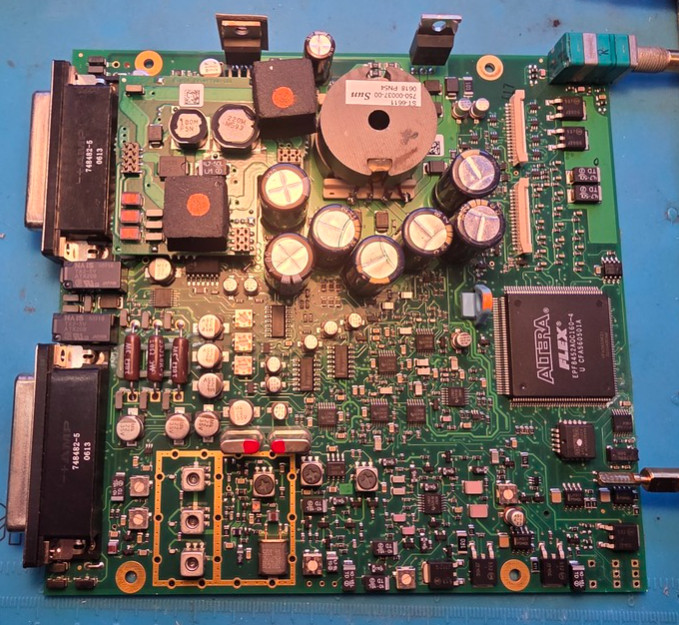
It won't be radiation. This is a GMA340 GA (general aviation) product, probably max certification altitude 20,000ft.
The function is an audio panel (an intercom in unfashionable terminology) which has a load of inputs e.g. mikes, line level inputs, loads of outputs e.g. headset speakers, a few-watts ceiling speaker, an RF section for ILS marker beacon receiving, and a front panel with a load of buttons and switches. Then it has some relays for signal switching.
I would expect the logic to be static (not clocked) and implement a combinatorial circuit, switching outputs based on front panel selections, with some priorities implemented. Probably 100 lines in an AVR.
This one is by Garmin. PS Engineering make a lot of very similar ones. These products are all a tour de force in how many discrete components can be thrown on a PCB

An interesting angle is that Garmin bought a competitor called UPS Aviation Tech which had managed to get FAA to let them do certification internally (subject to some auditing) and Garmin bought UPSAT to get this concession (and basically shut UPSAT down almost right away
). So Garmin don't need to demonstrate compliance to an outside body - within certain limits.
4000 series CMOS will go on forever.
Big FPGAs are a different thing I am sure. This is a very simple case. I just don't "get" an FPGA here, especially given their relatively limited production life and with the little EPC1064 configuration memory chip having to be - like the Xilinx ones from that era - programmed in a programmer (not on-PCB in those days) and then issued to the assembly line. Conceivably it could be in-circuit programmed via JTAG...
Re DO178, I can see a simple FPGA is a lot less work than an AVR

 Home
 Help
 Search
 Login
 Register


