Author Topic: Sealed lead-acid battery charger  (Read 20648 times)

0 Members and 1 Guest are viewing this topic.

Offline SharkTopic starter

  • Contributor
  • Posts: 32
  • Country: si
Sealed lead-acid battery charger
« on: October 11, 2013, 11:27:40 am »
Hi guys!

Some time ago I got interrested in sealed lead-acid (SLA) batteries and I wanted to make my own smart charger based on Arduino. Below is a brief description, pictures and my ideas for improvement.

Description:
  • Built around Arduino Uno R3
  • LCD display with user interface
  • Custom programs (charge&discharge, discharge&charge, charge&discharge&charge etc.)
  • Programmable cut-offs (low voltage cut-off when discharging, high temperature cut-off when charging etc.)
  • Keypad for navigating through menu
  • 500mA constant-current charger (slow charging)
  • 14Ohm discharge load (cca 0.86A @ 12V)
  • Measurements:
    • Voltage (battery) using voltage divider and Arduino ADC with oversampling and averaging
    • Current (charging and discharging) using low-side current sensing resistor and Arduino ADC
    • Temperature (environment, battery, charger and load) using DS18S20
  • DS3231 RTC for accurate time
  • RS232 output for logging on PC
  • PC logging and graphing software written in C# which listens to RS232 port and updates graph in real-time
Possible improvements:
  • Add variable constant-current/constant-voltage charger
  • Add variable discharge load
  • Add testing mode that puts different loads on the battery and evaluates its health
  • Writing to SD card to log measurements without PC
  • Improve accuracy of voltage and current measurements (voltage ref. & better ADC)
  • Experiment with pulse-charging methods
  • Control the device with RS232 (in addition to LCD menu + keys interface)
Attached pictures display the device with a 12V 7Ah sealed lead-acid battery, 20x4 LCD display, load consisting of 4 power resistors and two screenshots showing charge and discharge curves.

Feedback welcome :)
 

Offline Balaur

  • Supporter
  • ****
  • Posts: 525
  • Country: fr
Re: Sealed lead-acid battery charger
« Reply #1 on: October 11, 2013, 12:00:11 pm »
Nice work. It is rewarding and beneficial to build all this by yourself. Congrats.

I find that device(s) that can log the charge and discharge cycles of batteries are quite useful. A few of my favorite (and quite well used I may say) tools are the Computerized Battery Analyser and the Turnigy Accucel-6 50W battery charger.

On the downside, please have a look at my comments:

- I cannot see the interest of the discharge feature. Discharging the batteries will steal useful cycles from the battery. Batteries made for deep-cycle use may not suffer as much, but there is no benefit to it. Maybe useful as a capacity measure tool, but the resistor approach is to limiting. Of course, a (programmable) constant current load is much more useful.
- Simple (unbalanced) SLA batteries charging is a rather simple affair. Apply a current-limited fixed voltage according to the battery manufacturer specs and there, you have your charger. You want to define the voltage, the current? Then buy the Turnigy Accucel. You cannot beat the feature set and the price.

Frankly, I would invest my time and efforts building a toolkit of nice, stand-alone tools such as:
- a generic, multi-channel logger with a collection of input "plugins": voltage, current, temperature, etc
- a programmable constant-current load that can log data to the logger or the PC
- a collection of honest, down-to-earth chargers for the various batteries that I may use. I have a collection of deep-cycle lead batteries for serious stuff and a few lipo ones for more compact applications. I'm either using the Turnigy battery charger or a few dedicated chargers

Best regards
 

Offline solotrek

  • Newbie
  • Posts: 2
Re: Sealed lead-acid battery charger
« Reply #2 on: October 11, 2013, 02:57:15 pm »
Actually, I like the idea you have here. A couple of things I would suggest..
1. Are you able to share the code for Arduino? Would love to see how you approach the charging and monitoring..
2. Adding other battery profiles.. ie AGM batteries etc
Looking forward to more info on this project.
 

Offline saturation

  • Super Contributor
  • ***
  • Posts: 4787
  • Country: us
  • Doveryai, no proveryai
    • NIST
Re: Sealed lead-acid battery charger
« Reply #3 on: October 11, 2013, 04:32:15 pm »
One thing you'd like to consider is a desulfator, this is one of the killer's of SLA.  There are many methods to do it, but some work better than others.  I recently changed my CC charger to one such charger and I was amazed that the AH increased from 12 to 14; the virgin state is 16AH.  I determined the AH at 3 amps then adjusted per Peukert's Law.

http://batteryminders.com/desulfating-battery-charger

Best Wishes,

 Saturation
 

Offline nctnico

  • Super Contributor
  • ***
  • Posts: 29702
  • Country: nl
    • NCT Developments
Re: Sealed lead-acid battery charger
« Reply #4 on: October 11, 2013, 04:45:09 pm »
If a lead acid battery is treated well (proper charging current and no deed discharge) then sulfation is not much of a problem.
There are small lies, big lies and then there is what is on the screen of your oscilloscope.
 

Offline mtdoc

  • Super Contributor
  • ***
  • Posts: 3575
  • Country: us
Re: Sealed lead-acid battery charger
« Reply #5 on: October 11, 2013, 05:10:38 pm »
Great project. :-+

Yes - it would nice to see your Arduino code!

Lead Acid battery sulfation is due primarily to chronic undercharging.  Battery "desulaftors" have an element of voodoo and there are lots of opinions on both sides about whether they are really effective by people who live and breath batteries (People who live off grid).

To make your charger most effective you might want to consider a 3 stage charging algorithm:

1. Bulk (constant current)
2. Absorb (constant voltage)
3. Float (lower constant voltage)

This would make it useful for deep cycle applications as well.  The length of time  in the absorb stage can be based on time or even better on end amps (measured amps into battery) - usually about 1-2% of battery AH capacity.


 HERE is a useful battery link about deep cycle batteries.
« Last Edit: October 11, 2013, 05:15:49 pm by mtdoc »
 

Offline johansen

  • Super Contributor
  • ***
  • Posts: 1402
Re: Sealed lead-acid battery charger
« Reply #6 on: October 12, 2013, 04:54:03 am »
I recommend shorting out the secondary of the transformer with two mosfets wired back to back, driven from the processor's pwm through a gate drive transformer, then full bridge rectify.

Use 30 amp 45 volt schottky diodes from the nearest broken atx pwr supply for the bridge rectifier, and you'll need a small capacitor on the output of the bridge to keep the voltage spikes down to reasonable levels. 10uF should be plenty.

As long as the transformer's nominal voltage is below 10 volts ac for a 12 volt battery you should have no problems with complete control over the current by changing the pwm duty cycle.

transformer heating is an issue, you may have to experiment with the optimum frequency, on the order of 5Khz is a good starting point.
 

Offline SharkTopic starter

  • Contributor
  • Posts: 32
  • Country: si
Re: Sealed lead-acid battery charger
« Reply #7 on: October 12, 2013, 07:17:49 pm »
Hi again, thanks to everyone that commented, got some great feedback!

@solotrek and @mtdoc: I'll try to find a good way to publish the source code.

@mtdoc: Great proposal, I plan on upgrading my charger with the 3-stage algorithm. For this I need to add an adjustable constant voltage source.

@saturation: Sulfation has been one of the things on my mind and I have a few sulfated SLA batteries on which I'd like to try different techniques of de-sulfation.

@nctnico: Hmm, I thought that sulfation is the primary cause of SLA battery losing its capacity and that de-sulfating it can recover a part of lost capacity. But I have only recently started to have interess in SLAs and I'm no expert on it.
 

Offline nctnico

  • Super Contributor
  • ***
  • Posts: 29702
  • Country: nl
    • NCT Developments
Re: Sealed lead-acid battery charger
« Reply #8 on: October 14, 2013, 12:17:40 am »
One of my customers does lead-acid battery regeneration (desulfation) on an industrial scale. There is money to be made so the details are kept a closely guarded secret. The thing is that there are several failure mechanisms in a battery. Poor charging / discharging which causes sulfation is a major one. Then there is the normal wear caused the lead falling from the plates of the battery. Last but not least there can be mechanical problems (bad inner contacts). BTW a while ago this customer showed me a big traction battery which exploded because improper charging caused the formation of hydrogen and oxygen. The damage was pretty impressive; the top of the battery got blown off clean and the casing was cracked all over.
There are small lies, big lies and then there is what is on the screen of your oscilloscope.
 

Offline johansen

  • Super Contributor
  • ***
  • Posts: 1402
Re: Sealed lead-acid battery charger
« Reply #9 on: October 14, 2013, 11:51:06 pm »
BTW a while ago this customer showed me a big traction battery which exploded because improper charging caused the formation of hydrogen and oxygen. The damage was pretty impressive; the top of the battery got blown off clean and the casing was cracked all over.

i've managed to do that, but i was intentionally using the batteries to make hydrogen and oxygen. drilled holes in the vent caps and hot glued some tubes to them.

anyhow.

one of the causes of sulphation is the high price of antimony.
it is almost impossible to get lead-antimony batteries now, a few manufactueres are still making them but only for industrial users. (like submarines)

so basically about 10 years ago (i don't know the number for sure) all lead acid battery manufactuers world wide switched to lead-calcium at the same time.

there are a few issues.. calcium corrodes.. eventually, you get complete isolation between the positive grids and the active material. the negative doesn't have this problem of course. this is why SLA's go open circuit if you don't cycle them every few months minimum.

some of us remember when a car battery lasted 10 years. now, maybe 5 if you're lucky.
 

Offline linux-works

  • Super Contributor
  • ***
  • Posts: 2073
  • Country: us
    • netstuff
Re: Sealed lead-acid battery charger
« Reply #10 on: January 02, 2016, 06:16:55 pm »
reviving an old thread; maybe for a new purpose.

I recently had a dead car battery and wanted to see if I could charge it to save the cost of yet another replacement (just had it replaced 2 years ago, maybe 3 at the most).  I can't believe my batt is bad already.  car is vw passat (2003) 6-cyl.

so, for now, I bought a battery charger from a local auto parts store.  this one:
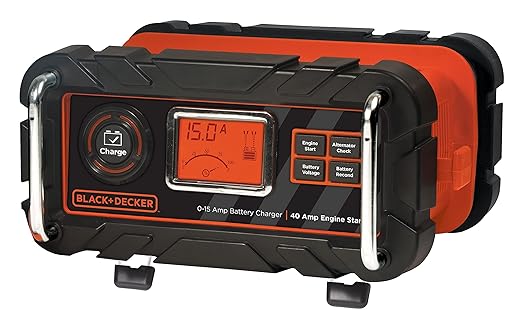

http://www.amazon.com/gp/product/B00KNMKRU8

and it does seem to work, at least at first trial.  I'll have to see if the batt is not able to KEEP a charge, as I condition it, but a half day's charge on it seemed to allow the car to start when I tried it.

what I'm wondering is: how much 'magic' is there in boxes like this?  I've read quite a few user reports of these boxes failing over time and while it might be the usual lytic caps that die, I have not opened the box yet so I don't know if there are other bad designs issues inside or not.

I'm curious if I can build my own that does all that this one does.  for extra features, I'd like some wireless notifications to be sent in to my house so that, when it changes state, I can know about it.  similarly, since I need to leave this connected to my car overnight and I can't lock my car inside, I would also like to have some kind of alarm on the unit so that I can be notified if the connection breaks, for any reason.  and while I'm at it, might as well build in all kinds of safety features, so that nothing bad happens.

anyone have any ideas on where to start?  I might open the unit later on and see if its worth adding things to the box as it is, or maybe I should start over from scratch.

I know there are constant current modes and constant voltage.  I don't THINK that charging lead acid is as hard/complicated as, say, li-poly.  and since I never want to have a discharge feature, the charger should be somewhat simple to design and build.

so, curious what people think about the idea.  either modify an existing platform and add some safety stuff and wireless notifications - or start from scratch.

the idea of unattended chargers connected to my car scares me a little and I really don't trust china, these days, to make power based electronics with safety in mind...


Offline masawee

  • Newbie
  • Posts: 2
  • Country: fi
Re: Sealed lead-acid battery charger
« Reply #11 on: July 04, 2016, 04:58:53 pm »
have you code and schematic thats ? i interesting make thats, because i looking many day were have arduino controlled gel battery charger,
but how i can use thats whit 2 pcs, 12 volt 14Ah battery together, i use 24volt to my diy E-bike battery and how can balancer chargin both battery sametime, just i orden 2pcs,  new gel battery 12V 14Ah (wait when come to home)
Im not sure what gel battery say, sla or agm battery but sealed battery box have and in have gel.
but if can use thats charge 12V 14Ah battery max volt 14,4-14,7 and max current 0,20XC, and stop about 0,01XC current charging. just read other internet what gel battery charging procedure need not come gas too much.
if you have link were code and schematic have send to me matti point virta ofcourse gmail point communites :D
i interesting lot because need somethink good cheap charger my diy E-bicyckle. 24v 350W motor.


Share me

Digg  Facebook  SlashDot  Delicious  Technorati  Twitter  Google  Yahoo
Smf