-
Yeah?
Hyperloop is hard.
Is it harder than making a luxury all-electric sedan with supercar-beating performance and 500 km range, and selling it at a profit for the price of an Audi or BMW? When everyone else was convinced you can only make golf carts.
Is it harder than taking a 30m high rocket 1st stage that is 75 km above the earth and travelling at 6000 km/h and propulsively landing it on a barge in the ocean? You've only got to go back about three years to find pretty much everyone saying it's somewhere between impossible and impractical. This year it has become so routine people are not bothering to get out of bed to watch the livecasts.
Hyperloop doesn't break any fundamental laws of physics. There are lots of challenges many of which could be showstoppers if they can't be solved. But that's just a matter of engineering. I'm sure it could be done. The question is more the economics.
I'm not a fan of high speed ground transportation. I can't see much point spending tens of billions on a single 300 or 400 km/h train route when a lowly Dash8 takes 40 - 60 passengers at over 500 km/h with infinitely flexible routes between any arbitrary pair of towns less than 1500 - 2000 km apart that each possess a 1000 - 1200 meter long airstrip (or less, with reduced range and/or passengers).
If you've got 1600m of runway available then you can step up to a CRJ (or A318 probably) with more seats, longer range, 800+ km/h speed, and lower operating costs. But even the Dash8 beats any non-hyperloop high speed ground transport.
But, again, I don't see any fundamental reason that Hyperloop is "BUSTED" in the sense of being impossible or breaking any fundamental laws.
-
They didn't even mention the most important and hardest part, and the one that will ultimately doom this concept. The vacuum

Jeez, how much money are those guys spending on this?
Or team has about 6m of tube and no vacuum pump. We can levitate our tiny pod, but that's it. The first time we'll know if the propulsion works is when it arrives at the proving round in September.
-
Not sure it has been posted, but here is the Tesla proposal:
https://www.tesla.com/sites/default/files/blog_attachments/hyperloop_alpha3.pdf
It does include a fair bit of detail. It doesn't run in a full vacuum like space - it runs at an air pressure in the tubes of 100 pascals - about 1/1000th of the atmosphere. In terms of safety concerns, it does seem to rely on the assumption that derailments, tube damage and collisions are extremely unlikely. If a carriage somehow becomes stranded, then supposedly all carriages behind it (the spacing can be under 800 meters) will stop and then drive back to the starting point on small battery powered electric wheels even of it is at atmospheric air pressure.
I do not think the possibility that every carriage in the tube could be stranded is considered. Say one carriage gets stranded and then one near the start of the tube fails while reversing on its wheels back to safety. The hundreds of carriages containing 28 people each in between would all be completely stranded. -
Not sure it has been posted, but here is the Tesla proposal:
https://www.tesla.com/sites/default/files/blog_attachments/hyperloop_alpha3.pdf
It does include a fair bit of detail. It doesn't run in a full vacuum like space - it runs at an air pressure in the tubes of 100 pascals - about 1/1000th of the atmosphere.
That makes things a little bit easier for the vacuuum pumps and permits minor leaks (mind you there is no such thing as a perfect vacuum). Structurally, it's identical to a full vacuum, for both the tube and the vehicles (and people in them).
I can't immediately find a table going that far, but I know a rule of thumb that says atmospheric pressure halves every 16000 ft is pretty close to at least 64000 ft, so ten halvings or 1/1024 of normal pressure is about 160000 ft altitude (50 km) equivalent.
-
Yeah?
Hyperloop is hard.
Is it harder than making a luxury all-electric sedan with supercar-beating performance and 500 km range, and selling it at a profit for the price of an Audi or BMW? When everyone else was convinced you can only make golf carts.
Is it harder than taking a 30m high rocket 1st stage that is 75 km above the earth and travelling at 6000 km/h and propulsively landing it on a barge in the ocean? You've only got to go back about three years to find pretty much everyone saying it's somewhere between impossible and impractical. This year it has become so routine people are not bothering to get out of bed to watch the livecasts.
Hyperloop doesn't break any fundamental laws of physics. There are lots of challenges many of which could be showstoppers if they can't be solved. But that's just a matter of engineering. I'm sure it could be done. The question is more the economics.
Yep. Exactly my sentiments. Both economics and the associated politics are what will make the ambitious long distance projects extremely difficult if not impossible - at least in the U.S.QuoteBut, again, I don't see any fundamental reason that Hyperloop is "BUSTED" in the sense of being impossible or breaking any fundamental laws.
Yes, but just don't try taking that stand with the Thunderf00t fanboys! -
Hyperloop doesn't break any fundamental laws of physics. There are lots of challenges many of which could be showstoppers if they can't be solved. But that's just a matter of engineering. I'm sure it could be done. The question is more the economics.
The economics really bother me. Is this suppose to be more cost effective than a concrete channel operating at atmospheric pressure or existing fast trains?
And I would consider the engineering and economic problems secondary to the political problems at least in the US. There are lots of government actors who can say no to something and none who can say yes. (1) And government actors do not get paid for not objecting.QuoteI'm not a fan of high speed ground transportation. I can't see much point spending tens of billions on a single 300 or 400 km/h train route when a lowly Dash8 takes 40 - 60 passengers at over 500 km/h with infinitely flexible routes between any arbitrary pair of towns less than 1500 - 2000 km apart that each possess a 1000 - 1200 meter long airstrip (or less, with reduced range and/or passengers).
And in the US once the TSA gets involved, it will lose all of the advantages of not dealing with the TSA at the airport.
(1) The way I remember it, that was how Southwest Airlines was able to get started. They got a route between Los Angels and San Fransisco where since it did not cross state lines, the federal government had little say in how they operated.
-
busted as in, not practical.
-
Hyperloop doesn't break any fundamental laws of physics. There are lots of challenges many of which could be showstoppers if they can't be solved. But that's just a matter of engineering. I'm sure it could be done. The question is more the economics.
The economics really bother me. Is this suppose to be more cost effective than a concrete channel operating at atmospheric pressure or existing fast trains?
The track is really cheap to build.QuoteI'm not a fan of high speed ground transportation. I can't see much point spending tens of billions on a single 300 or 400 km/h train route when a lowly Dash8 takes 40 - 60 passengers at over 500 km/h with infinitely flexible routes between any arbitrary pair of towns less than 1500 - 2000 km apart that each possess a 1000 - 1200 meter long airstrip (or less, with reduced range and/or passengers).
And in the US once the TSA gets involved, it will lose all of the advantages of not dealing with the TSA at the airport.
I'm actually on a hyperloop team and the main thing being talked about at the moment is cargo, not people. Sending shipping containers from one end of the country to another at 3000km/h is very attractive.
-
Hyperloop doesn't break any fundamental laws of physics. There are lots of challenges many of which could be showstoppers if they can't be solved. But that's just a matter of engineering. I'm sure it could be done. The question is more the economics.
The economics really bother me. Is this suppose to be more cost effective than a concrete channel operating at atmospheric pressure or existing fast trains?
The track is really cheap to build.
Not compared to "no track" for a plane (or rocket).QuoteQuoteI'm not a fan of high speed ground transportation. I can't see much point spending tens of billions on a single 300 or 400 km/h train route when a lowly Dash8 takes 40 - 60 passengers at over 500 km/h with infinitely flexible routes between any arbitrary pair of towns less than 1500 - 2000 km apart that each possess a 1000 - 1200 meter long airstrip (or less, with reduced range and/or passengers).
And in the US once the TSA gets involved, it will lose all of the advantages of not dealing with the TSA at the airport.
I'm actually on a hyperloop team and the main thing being talked about at the moment is cargo, not people. Sending shipping containers from one end of the country to another at 3000km/h is very attractive.
300 km/h matching or beating most fast trains I can easily believe.
800 km/h makes me go "hmmmmm"
3000 km/h completely fails to pass the giggle test.
-
The economics really bother me. Is this suppose to be more cost effective than a concrete channel operating at atmospheric pressure or existing fast trains?
It was supposed to be more cost effective than the existing California High Speed Rail project. That's the whole reason for the proposal.
-
The economics really bother me. Is this suppose to be more cost effective than a concrete channel operating at atmospheric pressure or existing fast trains?
It was supposed to be more cost effective than the existing California High Speed Rail project. That's the whole reason for the proposal.
California is not known for fiscally responsible rail projects. When they built BART, they selected a non-standard track gauge ensuring higher costs and then things got worse when they later needed replacement stock.
-
3000 km/h completely fails to pass the giggle test.
What's the cargo capacity of this: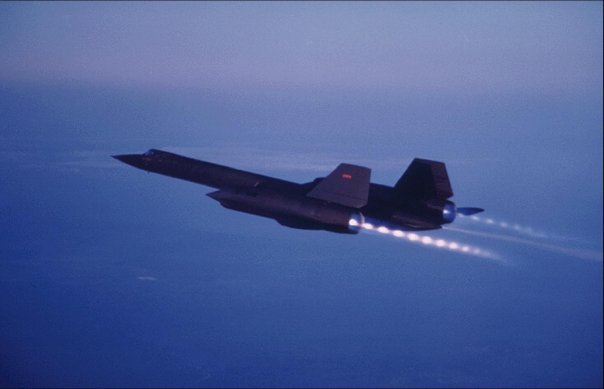
PRO: Can use existing facilities and fuel, has green exhaust on ignition (https://en.wikipedia.org/wiki/Triethylborane)
CON: None that I can see
If there was a need for Mach 3 cargo, it could have been done half a century ago.
Besides, with 3D printers having "changed the game" (how many times now?), I thought we could fabricate anything on demand... -
PRO: Can use existing facilities and fuel, has green exhaust on ignition
No.
CON: Must use a special fuel.
CON: Requires special facilities, e.g. start with less than full load of fuel and fill up after start from air tanker.
CON: Cargo space designed for a few special cargo options, not for standard containers.
-
PRO: Can use existing facilities and fuel, has green exhaust on ignition (https://en.wikipedia.org/wiki/Triethylborane)
Actually
CON: Can't use existing facilities and fuel
it burned a really weird JP-7 mixture.
-
Well, OK, if you want to be picky about it... You also need two big block Hemis to start the thing, but I don't see that as a CON either.

-
They just want to spend tax money on high profit get rich quick schemes which they undoubtedly get kickbacks from, instead of investing it into anything that would actually help people.
-
I've flown between LA and SF dozens of times, and its a short relaxing flight with amazing views which is over before you know it. What sucks is the LAX and SFO airport traffic. Which is why smart travelers fly between Oakland and Long Beach. Its cheaper too.
There really is no need for a huge money spending hype-train project. Conventional high speed rail like they have in many other countries can make the trip in a bit more than an hour. -
I've flown between LA and SF dozens of times, and its a short relaxing flight with amazing views which is over before you know it. What sucks is the LAX and SFO airport traffic. Which is why smart travelers fly between Oakland and Long Beach. Its cheaper too.
I've flown and taken the train between Los Angeles and San Diego and despite its problems, the train is much nicer in every way from dealing with security to the trip itself. The same would be true between southern California and San Fransisco if the train was faster.
The only real problem with the train is that Amtrak runs on freight lines so is subject to freight scheduling lengthening travel time. Between LA and SD you spent half of the travel time creeping along.
If trains were competitive though, I doubt this situation would last. The government would screw it up.
-
>The government would screw it up
It's a moot point.
My understanding that since January 1, 1995, our government, as well as other WTO members, are now largely prohibited from entering fields except where services are "supplied in the exercise of governmental authority"
"'a service supplied in the exercise of governmental authority' means any service which is supplied "neither on a commercial basis, nor in competition with one or more service suppliers."
Basically, competition policy makes it FTA-illegal for governments to enter fields where they would be competing with any commercial entity, unless they already had done so in 1995. (Especially in financial services, regulatory changes subsequent to a freeze enacted in 1998 must now be rolled back)
The ideology of progressive liberalization, (One way irreversible privatization) part of international economic governance now, gradually expands the sphere of corporate entitlement to include all service sectors and modes of supply, as well as captures all legislation in a one way manner if its deregulation. Thats called the "ratchet". CalTrain is a commercial entity and tickets are certainly not free- Like healthcare and higher education, railways are now commercial in the United States and cannot be expropriated. A few countries that make some services completely free, like healthcare in Canada, are exempted as long as they don't allow any commercial competition in (for example, private for profit healthcare, like in England, has caused the gradual privatization of the NHS, due to GATS and its progeny, TiSA.) (See also here)
Australia has seen much privatization of roads. Also, the agreements gradually force international tending process and procurement, i.e. outsourcing of public service jobs or quasi publc services (whenever tax money is spent) -
One problem with strictly private, commercial development of any Hyperloop route of consequence is that it would require that the government - through the legislature - acquire the necessary land in the name of the private entity building the route.
In the US anyways, the eminent domain clause of the 5th amendment requires "just compensation" be given to those whose land is taken. -
Pre-development value, and it varies, consensus is usually around 3/4 of value is paid but then movers get a higher tax basis so many don't make it.
Now towns just give land to developers.. its often hype.
-
One problem with strictly private, commercial development of any Hyperloop route of consequence is that it would require that the government - through the legislature - acquire the necessary land in the name of the private entity building the route.
In the US anyways, the eminent domain clause of the 5th amendment requires "just compensation" be given to those whose land is taken.
That has not been a problem since our US Supreme Court ruled that "public" means the same thing as "private" in Kelo v. City of New London and our government has no problem not paying just compensation. One trick they use is to condemn or otherwise encumber the land to be taken reducing its free market value to practically zero.
-
The Hype-rloop has been 100% successful.
It has succeeded beyond anyone's wildest imaginations in separating unwitting investors from over $30MM USD. Since parting fools from money is all that matters these days, I suppose that should be commendable. -
That has not been a problem since our US Supreme Court ruled that "public" means the same thing as "private" in Kelo v. City of New London and our government has no problem not paying just compensation. One trick they use is to condemn or otherwise encumber the land to be taken reducing its free market value to practically zero.
That's an interesting link. If you read through it you'll see that one result of that case was that several states (including California) passed new legislation to restrict or prohibit state or local government from using eminent domain to acquire property for private use. Of course I have no doubt that if enough money is involved corrupt politicians would try to find ways around those laws. -
That has not been a problem since our US Supreme Court ruled that "public" means the same thing as "private" in Kelo v. City of New London and our government has no problem not paying just compensation. One trick they use is to condemn or otherwise encumber the land to be taken reducing its free market value to practically zero.
That's an interesting link. If you read through it you'll see that one result of that case was that several states (including California) passed new legislation to restrict or prohibit state or local government from using eminent domain to acquire property for private use. Of course I have no doubt that if enough money is involved corrupt politicians would try to find ways around those laws.
Most of the state legislation is for show only and is either misleading or contains enough loopholes and exceptions to subvert the stated purpose.
https://www.washingtonpost.com/news/volokh-conspiracy/wp/2015/06/04/the-political-and-judicial-reaction-to-kelo/