-
So why does the Type 503 use a 6DQ6A beam power tube? I have the answer. It utilizes a vacuum tube SMS supply.
 Those clever Tek engineers. See the schematics. Transformer T601 supplies the tube heater voltages plus the +500V plate voltage to the 6DQ6A. That tube is fed from the grid with an approx 30kHz pulse from the oscillator. That amplified 30kHz pulse is fed to transformer T620 which in turn supplies all the PSU voltages plus the HV. The only disadvantage I see to this is that the 6DQ6A is passing a lot of current and is going to run hot. And this scope has no fan. We'll have to see how warm it gets.
And also, check out C682 and C684. Paralleled capacitors. As I mentioned before I've see this often on Tek equipment. Why it's done I don't know. But I will replace them with a single capacitor of 22uF and 82uF.

Some vintage TV's do use the flyback transformer to provide other supplies as well as the HT, it rather reminds me of the TV resurrection videos on youtube, Shango066 has some weak horizontal output tubes to use in case of faults that would quickly red-plate & ruin an expensive tube* & sometimes the damper tube too.
*having said that the 6DQ6A doesn't seem one of the more expensive ones.
David
Yes, some TV's did use the flyback to generate other B+ voltages other than just the HV. But that was the exception rather than the norm.
And yes, as soon as I realized that the Type 503 used a 6DQ6A I immediately went on Ebay to check availability just in case. Turns out it's cheap and plentiful.
And finally, I fell asleep in my easy chair and missed Discord.

-
So why does the Type 503 use a 6DQ6A beam power tube? I have the answer. It utilizes a vacuum tube SMS supply.
Those clever Tek engineers. See the schematics. Transformer T601 supplies the tube heater voltages plus the +500V plate voltage to the 6DQ6A. That tube is fed from the grid with an approx 30kHz pulse from the oscillator. That amplified 30kHz pulse is fed to transformer T620 which in turn supplies all the PSU voltages plus the HV. The only disadvantage I see to this is that the 6DQ6A is passing a lot of current and is going to run hot. And this scope has no fan. We'll have to see how warm it gets.
And also, check out C682 and C684. Paralleled capacitors. As I mentioned before I've see this often on Tek equipment. Why it's done I don't know. But I will replace them with a single capacitor of 22uF and 82uF.
Some vintage TV's do use the flyback transformer to provide other supplies as well as the HT, it rather reminds me of the TV resurrection videos on youtube, Shango066 has some weak horizontal output tubes to use in case of faults that would quickly red-plate & ruin an expensive tube* & sometimes the damper tube too.
*having said that the 6DQ6A doesn't seem one of the more expensive ones.
David
Yes, some TV's did use the flyback to generate other B+ voltages other than just the HV. But that was the exception rather than the norm.
Not in Oz, it wasn't, both "B+boost" in tube designs & overwinds on solid state EHT trans were more common than any other way of doing things.Quote
And yes, as soon as I realized that the Type 503 used a 6DQ6A I immediately went on Ebay to check availability just in case. Turns out it's cheap and plentiful.
And finally, I fell asleep in my easy chair and missed Discord. -
I was up to my elbows in gingerbread & icing. Also testing that D3 digital microscope. Soooo close... but not quite; it's going back for the next more expensive model.
I'll post a short review once I have pics ready.
mnem
*drops back & punts* -
Not in Oz, it wasn't, both "B+boost" in tube designs & overwinds on solid state EHT trans were more common than any other way of doing things.
I should have been more specific. I was referring to vintage vacuum tube designs. Yes, some did have an extra B+ Boosted supply originating from the flyback. If I recall that became somewhat necessary when TV's started going cheap by employing series string and elimination of the power transformer.
Now when TV's started going solid state all bets were off. All sorts of creative designs were employed. -
TinkerDwagon Quickie: Jiusin DM3 Full HD Digital Microscope: https://www.amazon.com/gp/product/B07D9FK8LW
This is what's in the box. Installed in the microscope head is were also a 18650 cell and "SanDisk 16GB" XD card; both of dubious quality at best. Assembly takes ~3 minutes using included hex wrench.
Which yields this base & elevator frame of actually pretty decent quality; everything is metal, except a little friction slider insert and those blue buttons on the objective clamp. Oh, and some little plastic caps on the elevator knobs, which are all metal otherwise; even the camera lens assembly is metal. Quite decent quality given the price point; but the base is just a hair small for even my little project.
Raising the elevator is a little notchy due to the blasted & anodized surface of the rack teeth; it's not too bad and it should get better with use and a little silicone grease.
Quality of the 4.3" screen is actually quite impressive; it is crisp and clear and I certainly believe the claims that it is a 1080P screen. However, magnification simply is not great enough; in order to mostly fill the screen with that 2.1mm chip, the objective is ~20-30mm above the work. There is barely room to get a bent soldering iron tip in there, and no room at all for a hot air nozzle. With objective elevated to 90% of max or so, there is room to reasonably get in there with a nozzle. At that height, the chip measures approx 6.6mm across on the screen; I'll let you do the math as to what the effective diopter is. It simply is not nearly clear enough on either its own screen or the live video app, which displays max 1280x720 res.
Puttering around, I tried getting it to a workable state by cocking the objective in the elevator bracket. This yielded a semi-workable contraption where I could just get in there with a nozzle at ~50mm elevation; this did somewhat risk contacting the plastic objective shell with the hot main body of the rework handset. This layout produced a just-usable image on the screen, but breathing on the unit made the microscope head shift wildly.
Here's a screencap of what it put out at 30-50mm elevation. I toyed with the idea of 3DP-ing something to make a hinged base for the thing, so it would swing back that way properly... but looking again on Amazon, I found a similarly specced 7in model for CAD$113/US$90, or CAD$43/US$35 more.
It has a larger hinged base, and is supposedly 2x the magnification. https://www.amazon.com/gp/product/B07XVC1LWB
For CAD$112/US$90 , even if the magnification is identical to this one, it will be worth it for the usability factor. It's on its way; should see it tomorrow.
mnem
*toddles off to ded*
-
Exploring the capabilities of the Type 503...
Even though it only has 1 vertical channel it has the capability of going into full XY mode. By turning the Horizontal Display knob full clockwise the horizontal sweep is disabled and the scope enters XY mode. The Horizontal (Y) has a set of controls on the lower right identical to the Vertical (X) on the left. The 2nd pix is a sine wave and a triangle wave of equal frequency and amplitude with the resultant waveform.

With it's differential inputs and it's XY capability this scope can be quite useful. The only downside is it's bandwidth. 450kHz which is pitiful compared to today's offerings. But it has an ace up it's sleeve. The trace is absolutely magnificent. Laser sharp. The best I've ever seen bar none. It even beats the Type 535A which is no easy feat. And DSO's aren't in the same league. But this scope would be an excellent addition to any audio lab. With the differential input and sharp trace any stage to stage distortion in an audio amplifier is going to show up like a lump of bird shit on a windscreen after you smeared it by turning on the wipers. It will keep an audiophool busy for weeks.
-
the calibrating of the 9814 is more expensive then the money I have given to ebay for the instrument

-
the calibrating of the 9814 is more expensive then the money I have given to ebay for the instrument
Yes, well, that's traditional.
But I expected you to have got one of the 5 sold by Ramco a few days ago. -
this one was sold by the german "jant ing" in the bay.
But I have seen there was some 9814 in UK, and one of them is on the way to a friend in my community.
-
This is precisely why I want an accurate and traceable voltage reference but then again I don't want one. Because in order to be traceable it needs to be checked and calibrated by a certified lab. Which will eat up months of TEA budget. All to gain just a few uV accuracy and certainty.
No matter how I spin it the numbers don't work.
-
This is precisely why I want an accurate and traceable voltage reference but then again I don't want one. Because in order to be traceable it needs to be checked and calibrated by a certified lab. Which will eat up months of TEA budget. All to gain just a few uV accuracy and certainty.
No matter how I spin it the numbers don't work.
I want a stable voltage reference, measured once. Fortunately my nice old ones do appear to be stable.
If the numbers are spinning, clearly it isn't stable enough
-
I want a stable currency reference. If it is spinning, my tea budget clearly is not stable.
-
Having some fun with TE and another device:
https://cb.wunderkis.de/wk-pub/what.mp4
What's that device?
-
and GIMP is the winner, adobe PS and its cloud subscription clown will go in the bin ASAP.
Redoing the cracked display of that very old radio which my dad loves.
How you can say no to him?
The challange is to print that on a plexiglass or similar with transparent area... one problem after the other...
what you guys do when you need to redo a display with transparent areas...basically graphics of glass?
You can print onto transparencies, the archetypical overhead projector 'acetate', and then attach that to a sheet of acrylic with one of the UV setting glues used for bonding mobile phone displays. Quite easy to find the glue in small quantities on ebay. Needs a few practice runs on test prices to get the technique of doing it without entrapping bubbles of air.
+1 for this. You can then mask sections of the rear with tape and use spray paint to provide the solid background colour(s) -
Having some fun with TE and another device:
https://cb.wunderkis.de/wk-pub/what.mp4
What's that device?
Haven't had enough coffee today to actually think it out properly. Synchro?
-
I want a stable currency reference. If it is spinning, my tea budget clearly is not stable.
That stable reference currency would be “working Heathkit capacitor testers” in the TE space. -
Having some fun with TE and another device:
https://cb.wunderkis.de/wk-pub/what.mp4
What's that device?
Haven't had enough coffee today to actually think it out properly. Synchro?YepBut close enough. Resolver.
-
Not in Oz, it wasn't, both "B+boost" in tube designs & overwinds on solid state EHT trans were more common than any other way of doing things.
I should have been more specific. I was referring to vintage vacuum tube designs. Yes, some did have an extra B+ Boosted supply originating from the flyback. If I recall that became somewhat necessary when TV's started going cheap by employing series string and elimination of the power transformer.
Now when TV's started going solid state all bets were off. All sorts of creative designs were employed.
North American and 220/240V countries differed greatly in their approch to valve / tube TV design. In NA they typically had a mains trandformer supplying different voltages. In the UK at least thwy were transformerless designs with a "hot" chassis connected to mains, Filaments in trings with dropper resistors in series and multiple voltages generated from the flyback transformer. They were a significant hazrd to work on
-
and GIMP is the winner, adobe PS and its cloud subscription clown will go in the bin ASAP.
Redoing the cracked display of that very old radio which my dad loves.
How you can say no to him?
The challange is to print that on a plexiglass or similar with transparent area... one problem after the other...
what you guys do when you need to redo a display with transparent areas...basically graphics of glass?
You can print onto transparencies, the archetypical overhead projector 'acetate', and then attach that to a sheet of acrylic with one of the UV setting glues used for bonding mobile phone displays. Quite easy to find the glue in small quantities on ebay. Needs a few practice runs on test prices to get the technique of doing it without entrapping bubbles of air.
+1 for this. You can then mask sections of the rear with tape and use spray paint to provide the solid background colour(s)
Or stick on bits of theatrical 'gels'* with the same kind of glue (making sure that the UV is getting to the glue through something with a decent passband in the UV region), if you want something to shine a light through.
* http://www.leefilters.com/lighting/colour-list.html -
Having some fun with TE and another device:
https://cb.wunderkis.de/wk-pub/what.mp4
What's that device?
It's a synchro differential transformer.
3 input windings, rotor and three output windings plus mechanical shaft input.
Normally input is 3 wire 400Hz synchro signal with the amplitude of the input lines representing the shaft angle of a synchro transmitter (note they are not phases, the 3 windings are 120 degrees apart mechanically but the output is either in phase or 180 deg out of phase (quadrature) with the reference.) with 26V on it's rotor.
Output is 3 voltages (0-11.6V in phase or quadrature)representing the difference detween the input electrical "angle" and the shaft angle.
Wonderful things synchros.
-
One of my favourite "weird wound components" is the Linear Differential Voltage Transformer, that translates a linear shaft position into the amplitude of a AC output voltage and the phase of the output signal tells you which direction the shaft is displaced from its null (nominally 0V) position. I've seen ones that can measure an absolute linear position to a micrometer but are robust enough to survive usage in a machine shop.
-
Looks like, that this one isn't produced anymore:
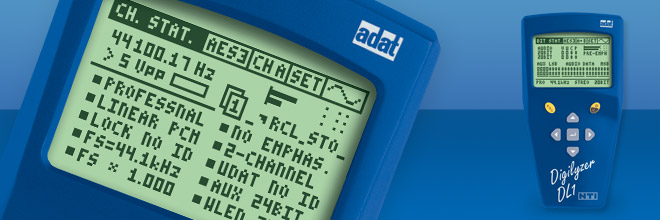
https://www.nti-audio.com/en/products/digilyzer-dl1
This one is my favourite, but it is also discontinued.
-
Having some fun with TE and another device:
https://cb.wunderkis.de/wk-pub/what.mp4
What's that device?
It's a synchro differential transformer.
3 input windings, rotor and three output windings plus mechanical shaft input.
Normally input is 3 wire 400Hz synchro signal with the amplitude of the input lines representing the shaft angle of a synchro transmitter (note they are not phases, the 3 windings are 120 degrees apart mechanically but the output is either in phase or 180 deg out of phase (quadrature) with the reference.) with 26V on it's rotor.
Output is 3 voltages (0-11.6V in phase or quadrature)representing the difference detween the input electrical "angle" and the shaft angle.
Wonderful things synchros.
I've reckoned you'd know that stuff. It's a resolver indeed, it has two stator and two rotor windings.
-
Pictures of one of my synchro test sets and a differential control transmitter with attached 360 degree digital counter.
The tet set will transmit the angle shown on the two pointer dial (you slew it to position electrically), output a rate in degrees per minute (set on multiturn dial) while showing current position or display the angle of an input signal. I have digital indicators too. The differential unit came from a doppler radar control unit were it was used to enter a track offset.
LVDTs are cool and very repatable and are a good stepping stone to understanding synchros. The big thing to remember with synchros is that whle they have 3 lines and windings 120 degrees apart, they are NOT 3 phase systems.
-
Having some fun with TE and another device:
https://cb.wunderkis.de/wk-pub/what.mp4
What's that device?
It's a synchro differential transformer.
3 input windings, rotor and three output windings plus mechanical shaft input.
Normally input is 3 wire 400Hz synchro signal with the amplitude of the input lines representing the shaft angle of a synchro transmitter (note they are not phases, the 3 windings are 120 degrees apart mechanically but the output is either in phase or 180 deg out of phase (quadrature) with the reference.) with 26V on it's rotor.
Output is 3 voltages (0-11.6V in phase or quadrature)representing the difference detween the input electrical "angle" and the shaft angle.
Wonderful things synchros.
I've reckoned you'd know that stuff. It's a resolver indeed, it has two stator and two rotor windings.
You are correct I was wrong, I only saw 3 wires at the first look.
Same purpose but has separate Sine and Cosine voltages (and windings) representing the input and output angles.